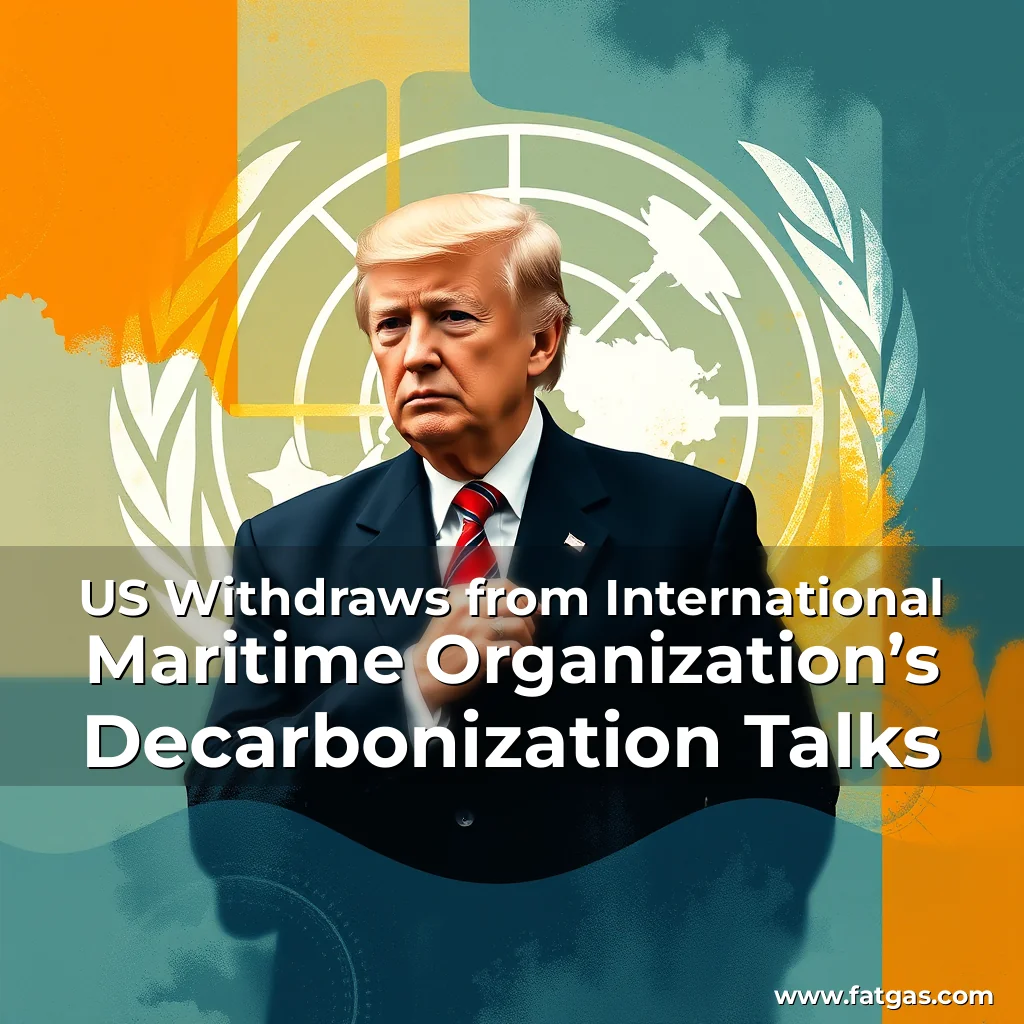
The United States has withdrawn from the International Maritime Organization’s (IMO) Marine Environment Protection Committee (MEPC) negotiations on decarbonization, marking a significant shift in the country’s engagement with global environmental agreements.
Background
The IMO is a specialized agency of the United Nations responsible for developing and implementing international conventions and agreements to promote safety, security, and environmental performance of international shipping. The MEPC is the IMO’s primary committee for addressing environmental issues related to shipping.
Reasons for Withdrawal
The U.S. withdrawal is attributed to the Trump administration’s opposition to the IMO’s efforts to reduce greenhouse gas (GHG) emissions from shipping. The administration argues that such regulations “unduly discriminate” against fossil fuel companies and raise energy costs for Americans.
Proposed Decarbonization Measures
The IMO had proposed a carbon levy on shipping, which would have imposed a tax on shipping emissions through a fuel standard or a universal levy. However, the U.S. opposed both proposals, stating that it rejects any and all efforts to impose economic measures against its ships based on GHG emissions or fuel choice.
Reciprocal Measures
The U.S. has threatened to consider reciprocal measures to offset any fees charged to U.S. ships. The administration claims that it will protect the American people and their economic interests.
Impact
The withdrawal from the IMO talks may have significant implications for the global shipping industry’s efforts to reduce GHG emissions. The IMO’s current strategy aims for a 40% reduction in shipping’s carbon intensity by 2030 and 5-10% of shipping’s energy coming from zero or near-zero GHG emission sources by 2030.
The U.S. withdrawal is in contrast to other countries, such as the European Union, which have actively participated in the IMO talks and are committed to reducing GHG emissions from shipping.
“The U.S. rejects any and all efforts to impose economic measures against its ships based on GHG emissions or fuel choice,” according to a diplomatic demarche sent to ambassadors by the United States on Tuesday.
The U.S. withdrawal from the IMO talks is consistent with the Trump administration’s broader stance on climate agreements, including its earlier decision to leave the Paris Climate Agreement for a second time.
| Country | Support for IMO Talks | Support for GHG Emissions Reduction |
|---|---|---|
| U.S. | Withdrawn | Opposed to IMO’s GHG Emissions Reduction Goals |
| European Union | Participated in IMO Talks | Committed to Reducing GHG Emissions from Shipping |
Experts, such as Anaïs Rios, shipping policy officer at the Seas at Risk NGO, have criticized the U.S. withdrawal, calling it “new” for the country. The previous Joe Biden administration was active in the IMO talks.
“The IMO’s efforts to reduce GHG emissions from shipping are a critical step towards mitigating climate change. The U.S. withdrawal from these talks will undermine global progress towards reducing emissions and promoting sustainable shipping practices.”
The IMO’s current strategy aims to reduce shipping’s carbon intensity by 40% by 2030 and increase the use of zero or near-zero GHG emission sources to 5-10% by 2030. If the IMO persists in its Net Zero goals, it will face challenges in achieving these targets.
The U.S. withdrawal from the IMO talks is a significant shift in the country’s engagement with global environmental agreements. The country’s stance on climate agreements is increasingly isolated, with the U.S.