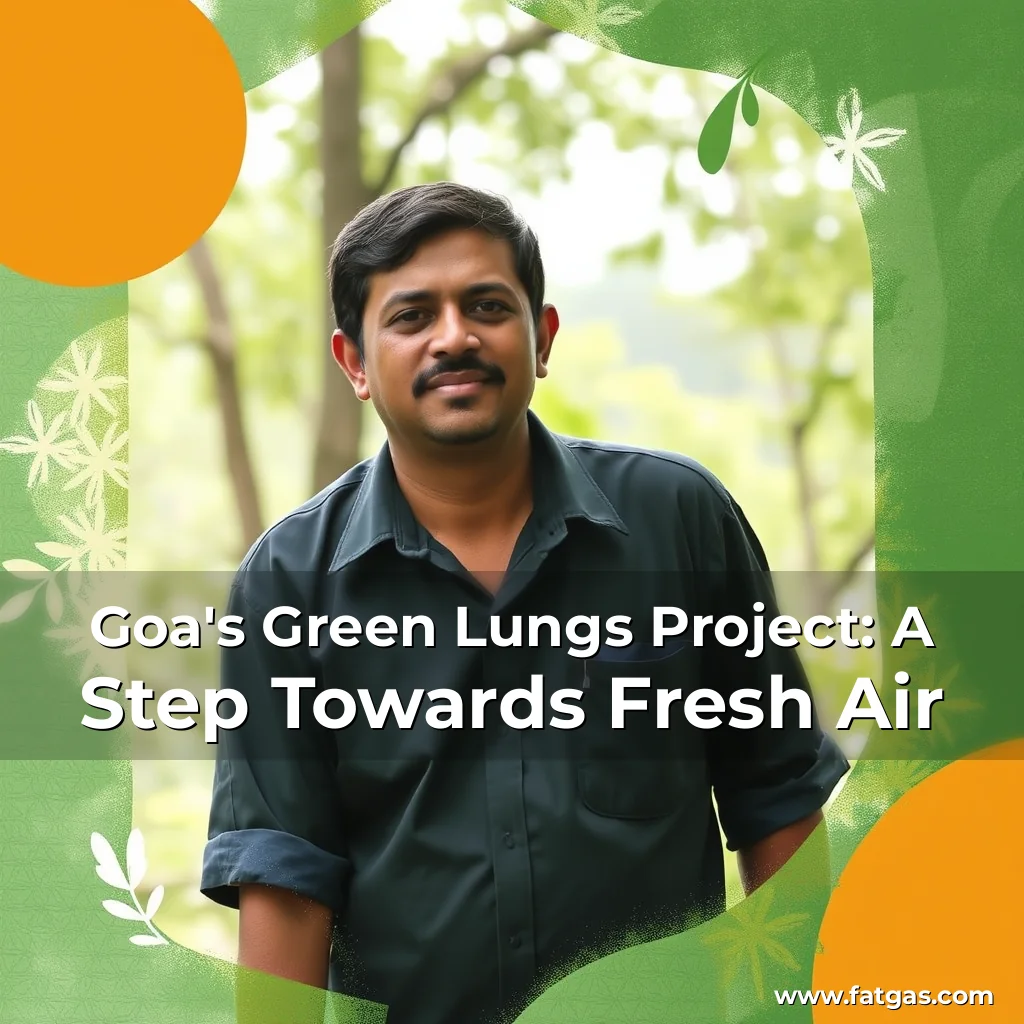
Trees are the oxygen factories of the world. They produce oxygen during the day through photosynthesis and release it at night, making it a natural and constant source of clean air. However, human activities such as deforestation, urbanization, and industrialization have led to a significant decrease in the number of trees and forests, resulting in poor air quality and negative impacts on human health. This is a critical concern in Goa, where the state government has recently launched the Green Lungs project to address this issue. The National Green Tribunal’s suo motu investigation into the country’s dwindling forest cover revealed that Goa has lost 921 hectares of tree cover between 2001 and 2023, resulting in a 0.63 per cent decrease since 2000. This loss has contributed to approximately 490 kilotonnes of CO2 emissions, highlighting the significant environmental impact of deforestation in the region. The project aims to develop green patches in urban areas to improve air quality, support biodiversity, and provide shaded public environments. The Forest Minister, Vishwajit Rane, has emphasized the importance of urban forestry in the context of climate resilience and urban heat mitigation. He has also highlighted the role of the forest department in identifying and supporting feasible sites within municipal areas for pilot projects. The proposed interventions include the transformation of degraded areas such as Sonsoddo using the Miyawaki afforestation technique, which focuses on creating self-sustaining, native forests in urban areas. • The Miyawaki afforestation technique is a method of reforestation that uses wet waste, rainwater, and other natural resources to create a dense, self-sustaining forest in a short period. • The technique involves planting native tree species in a specific arrangement to create a unique ecosystem. • The goal of this technique is to create a thriving forest ecosystem that can support biodiversity and mitigate the effects of urbanization. The Green Lungs project has the potential to improve air quality in Goan towns and cities, which have been plagued by dust pollution and poor air quality. According to an analysis by the Energy Policy Institute at the University of Chicago, Goans may gain 2.1 years of their average life expectancy if the state takes measures to reduce fine particulate matter (PM2.5) concentration to meet WHO guidelines. The state government has also set up several committees, including the state steering committee for air quality monitoring, the state air quality monitoring committee, and the district air quality monitoring committee, to address air pollution in the state. • The Energy Policy Institute at the University of Chicago conducted an analysis of global air quality data and found that Goans may benefit from improved air quality. • The analysis revealed that Goans may gain 2.1 years of their average life expectancy if the state takes measures to reduce PM2.5 concentration to meet WHO guidelines. • The study also found that air quality has been worsening in the cities and towns of Goa, with Vasco remaining the most polluted city in the state. The Green Lungs project is a commendable initiative that has the potential to improve air quality and provide a healthier environment for Goans. While there are challenges and complexities involved, the project’s goals align with the state’s commitment to improving air quality and reducing environmental impact.
| Key Features of the Green Lungs Project |
|---|
| Use of wet waste, rainwater, and other natural resources to create a dense, self-sustaining forest in a short period. |
| Transformation of degraded areas such as Sonsoddo using the Miyawaki afforestation technique. |
| Supporting biodiversity and providing shaded public environments. |
| Identification and development of feasible sites within municipal areas for pilot projects. |
**Government Commitment to Green Lungs Project**
The state government’s commitment to the Green Lungs project is a significant step towards addressing air pollution and improving air quality in Goa. The government’s efforts to reduce deforestation, promote sustainable forestry practices, and develop green spaces in urban areas will help to create a healthier environment for Goans. “We need to take immediate action to address the growing problem of air pollution in our state,” said Forest Minister Vishwajit Rane. “The Green Lungs project is a key initiative that will help us to improve air quality, support biodiversity, and provide shaded public environments.”
“We will work closely with the forest department and other stakeholders to ensure the success of the project,” added Rane. “We are committed to creating a healthier environment for our citizens and reducing our environmental impact.”
The Green Lungs project is a shining example of the government’s commitment to environmental sustainability and public health. By promoting sustainable forestry practices, reducing deforestation, and developing green spaces in urban areas, the state government is taking a significant step towards creating a healthier environment for Goans.
While the Green Lungs project has the potential to improve air quality and provide a healthier environment for Goans, there are still challenges and complexities involved. However, with the government’s commitment to the project and the efforts of the forest department, the project’s goals can be achieved. The project’s success will depend on the effective implementation of the Miyawaki afforestation technique, the identification and development of feasible sites within municipal areas, and the support of stakeholders.
The Green Lungs project is a commendable initiative that has the potential to improve air quality and provide a healthier environment for Goans. While there are challenges and complexities involved, the project’s success is possible with the government’s commitment and the efforts of the forest department.
As we move forward with the Green Lungs project, it is essential that we consider the long-term benefits of sustainable forestry practices and the importance of biodiversity in maintaining a healthy environment. By working together, we can create a healthier environment for Goans and reduce our environmental impact.
The Green Lungs project is a step in the right direction towards addressing air pollution and improving air quality in Goa. With the government’s commitment to the project and the efforts of the forest department, we can look forward to a healthier environment for our citizens.
“The Green Lungs project is a game-changer for our state. It will help us to reduce air pollution, support biodiversity, and provide a healthier environment for our citizens.”
– Vishwajit Rane, Forest Minister, Goa
“The Green Lungs project is a commendable initiative that has the potential to improve air quality and provide a healthier environment for Goans. We are committed to its success and will work closely with the forest department and other stakeholders to ensure its implementation.”
– Vishwajit Rane, Forest Minister, Goa
As the Green Lungs project moves forward, it is essential that we consider the potential impact on local communities and the environment. The project’s success will depend on the effective implementation of the Miyawaki afforestation technique, the identification and development of feasible sites within municipal areas, and the support of stakeholders. With the government’s commitment to the project and the efforts of the forest department, we can look forward to a healthier environment for our citizens. The project’s potential impact on biodiversity and ecosystem services should not be underestimated, and it is essential that we consider the long-term benefits of sustainable forestry practices.
Goan Government’s Commitment to Sustainability
The Goan government has made a commitment to sustainability, and the Green Lungs project is a key initiative in this effort. • The government’s commitment to sustainability is reflected in its initiatives to reduce greenhouse gas emissions and promote renewable energy sources. • The Green Lungs project is a key part of the government’s sustainability strategy, and its success will depend on the effective implementation of the Miyawaki afforestation technique and the identification and development of feasible sites within municipal areas. While there are challenges and complexities involved, the project’s success is possible with the government’s commitment and the efforts of the forest department. As we move forward with the project, it is essential that we consider the long-term benefits of sustainable forestry practices and the importance of biodiversity in maintaining a healthy environment. By working together, we can create a healthier environment for Goans and reduce our environmental impact.
While the Green Lungs project has the potential to improve air quality and provide a healthier environment for Goans, its success will depend on the effective implementation of the Miyawaki afforestation technique, the identification and development of feasible sites within municipal areas, and the support of stakeholders. The project’s success will not only improve air quality but also support biodiversity and provide shaded public environments.
The Green Lungs project is a shining example of the government’s commitment to environmental sustainability and public health. By promoting sustainable forestry practices, reducing deforestation, and developing green spaces in urban areas, the state government is taking a significant step towards creating a healthier environment for Goans.
As the Green Lungs project moves forward, it is essential that we consider the potential impact on local communities and the environment. By working together, we can create a healthier environment for Goans and reduce our environmental impact.
With the Green Lungs project, the Goan government is taking a significant step towards creating a healthier environment for its citizens. The project’s potential impact on biodiversity and ecosystem services should not be underestimated, and it is essential that we consider the long-term benefits of sustainable forestry practices. The project’s success will not only improve air quality but also support biodiversity and provide shaded public environments.
As the Green Lungs project moves forward, it is essential that we consider the potential impact on local communities and the environment. While there are challenges and complexities involved, the project’s success is possible with the government’s commitment and the efforts of the forest department.
As the Green Lungs project moves forward, it is essential that we consider the potential impact on local communities and the environment. The project’s potential impact on biodiversity and ecosystem services should not be underestimated, and it is essential that we consider the long-term benefits of sustainable forestry practices.
The Green Lungs project is a commendable initiative that has the potential to improve air quality and provide a healthier environment for Goans. The project’s potential impact on biodiversity and ecosystem services should not be underestimated, and it is essential that we consider the long-term benefits of sustainable forestry practices.
As the Green Lungs project moves forward, it is essential that we consider the potential impact on local communities and the environment. While there are challenges and complexities involved, the project’s success is possible with the government’s commitment and the efforts of the forest department.
The Green Lungs project is a step in the right direction towards addressing air pollution and improving air quality in Goa.