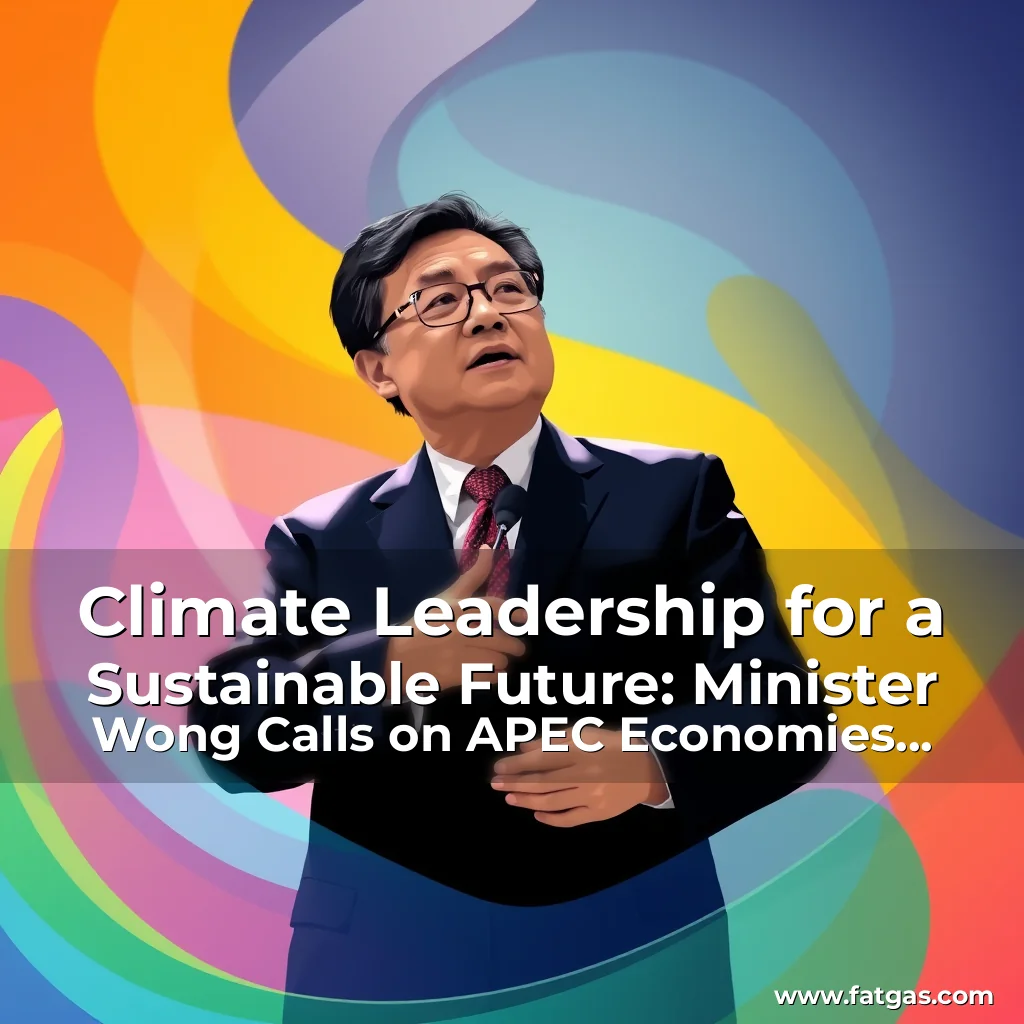
The Pacific Ocean, which serves as the lifeblood of many Pacific Island nations, including Papua New Guinea, is facing unprecedented climate-related challenges. Rising sea levels, ocean acidification, and extreme weather events are threatening the very existence of our coastal communities and marine ecosystems. The Minister for Fisheries and Marine Resources, Jelta Wong, has called on APEC member economies to demonstrate bold and inclusive climate leadership, not only by reducing emissions but also by scaling up support for adaptation, including technology transfer and climate finance. The theme of this year’s APEC Ocean-Related Ministerial Meeting, “Navigating Our Blue Future: Connection, Innovation, and Prosperity,” resonates deeply with PNG’s national development goals and aligns with the broader vision outlined in the 2050 Blue Pacific Strategy. A Call for Collective Action
Minister Wong emphasized the urgent need for collective action as Pacific Island nations face the frontlines of climate impacts. He urged APEC economies to show leadership by going beyond mitigation efforts to include robust support for climate adaptation, technology transfer, and targeted climate finance. “We are already witnessing rising sea levels, ocean acidification, and increasingly frequent extreme weather events that threaten our coastal communities and marine ecosystems,”
The Minister said “we call on all APEC economies to pair mitigation efforts with substantial adaptation support. The time to act decisively is now.”
Minister Wong also welcomed the Busan Ocean Declaration 2025, noting its alignment with Papua New Guinea’s national development goals and the broader aspirations of the 2050 Blue Pacific Strategy.
Key Areas of Action
- Climate Adaptation through Nature-Based Solutions
PNG is restoring over 1,000 hectares of mangrove ecosystems through the Mangrove Rehabilitation for Livelihoods initiative. These blue carbon ecosystems absorb emissions, protect shorelines, support biodiversity, and sustain community livelihoods.
- Combating Illegal, Unreported, and Unregulated (IUU) Fishing
PNG is committed to eliminating IUU fishing through enhanced vessel monitoring systems and regional observer programs. Minister Wong urged APEC members to invest in traceability technologies, strengthen cross-border intelligence sharing, and support the WTO’s efforts to end harmful fisheries subsidies.
- Maximizing Tuna Value Retention
PNG’s waters account for roughly 10% of the regional tuna catch, but much of it is exported without value addition. The East New Britain Initiative aims to establish a Regional Fisheries Development Fund, launch an East New Britain Sustainability Label, and build equitable partnerships with distant-water fishing nations.
Embracing a Balanced Blue Economy
The East New Britain Initiative represents a strategic blueprint for building value chains that benefit both our people and our environment. Minister Wong emphasized that while the Western and Central Pacific Ocean supplies more than half of the world’s tuna, Pacific Island countries like PNG capture only a small portion of the full economic value. “The ENB Initiative represents a bold, inclusive approach to a more resilient blue economy. It embodies our commitment to value-adding, sustainability, and development that directly benefits our communities,”
Minister Wong also highlighted that our ocean is central to our identity and prosperity, and that our policies must ensure that economic growth does not come at the cost of ecosystem degradation.
Conclusion
The Pacific Ocean connects our economies and our futures. Minister Wong called on APEC economies to act with unity and purpose. “The time to act decisively is now. Let us rise to this occasion with innovation, responsibility, and shared determination to ensure our oceans remain a source of life and opportunity for generations to come.”
In a closing statement, Minister Wong reiterated PNG’s commitment to the Busan Ocean Declaration 2025 and outlined the country’s vision for the blue economy, emphasizing a balance between economic development, ocean health, cultural heritage, and community resilience.
“Our ocean is central to our identity and prosperity,”
Minister Wong said. “Our blue economy model reflects this interconnectedness, and our policies must ensure that economic growth does not come at the cost of ecosystem degradation.”
The Minister’s call for climate leadership and collective action is a clarion call for APEC economies to work together to address the urgent challenges facing our oceans and our communities. With unity and purpose, we can build a more resilient blue economy that benefits both our people and our planet.
Key Takeaways
* PNG is taking action to address climate-related challenges, including restoring mangrove ecosystems and combating IUU fishing. * The East New Britain Initiative aims to maximize tuna value retention and build a more resilient blue economy. * APEC economies must demonstrate bold and inclusive climate leadership by scaling up support for adaptation, technology transfer, and climate finance. * Our ocean is central to our identity and prosperity, and our policies must ensure that economic growth does not come at the cost of ecosystem degradation.
Definition of Key Terms
*
: A sustainable economic model that balances economic development with ocean health, cultural heritage, and community resilience. *
: The process of adjusting to the impacts of climate change, including rising sea levels, ocean acidification, and extreme weather events. *
: Financial support provided to help countries adapt to the impacts of climate change. *
: Fishing that is illegal, unreported, or unregulated, and can have negative impacts on marine ecosystems.