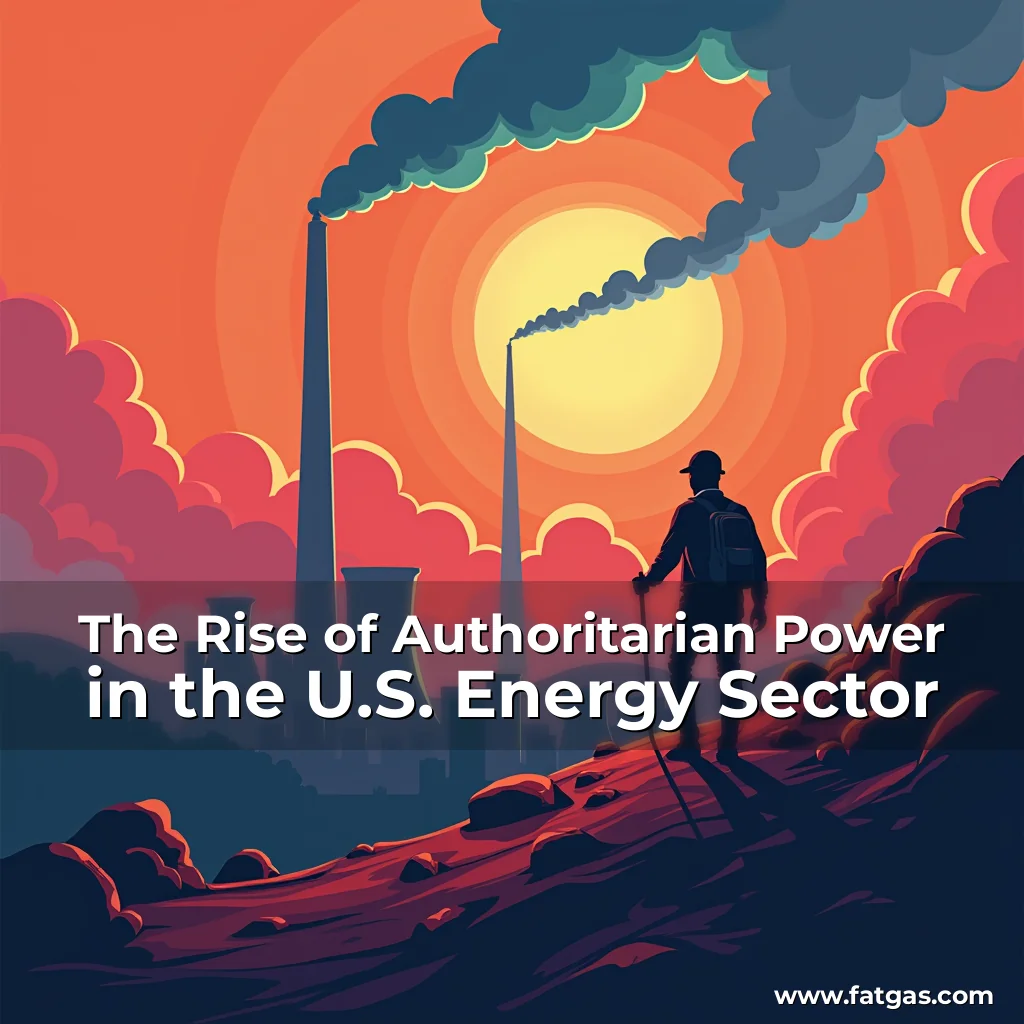
The Trump administration’s recent actions in the energy sector are a clear indication of the growing trend of authoritarian power in the U.S. The use of emergency provisions to advance the production of fossil fuels, suppression of the media, elimination of oversight positions, and usurping of tariff powers reserved for Congress are all hallmarks of authoritarian rule. A recent photograph of the Department of Agriculture building in Washington, featuring a nearly three-story-high banner bearing an image of a stern President Trump, serves as a visual representation of the political power that has accrued to the executive branch since his return to office. The president’s actions are not isolated incidents, but rather part of a larger pattern of behavior that has been building over the past few months. He has suppressed the media, eliminated numerous oversight positions, and usurped tariff powers reserved for Congress. He has also autocratically declared questionable “emergencies” around border security, the trade deficit, and illicit drugs from Canada. One of the most notable examples of this trend is the president’s use of emergency provisions to advance the production of fossil fuels. In his first day back in office, he declared a national energy emergency, which ostensibly grants him the authority to advance the production of fossil fuels. This move has been widely criticized as a blatant attempt to circumvent regulations and subvert checks on executive actions. The fossil fuel industry has a built-in power structure that enables governments to generate revenue from leases and taxes while enriching corporate donors who fund campaigns. This power dynamic is based on the following principles:
- Geology, capital, and drilling rights limit access to fossil fuels.
- Governments grant drilling rights via leases to corporations.
- Once extracted, the oil or gas belongs to the private corporation.
- Wealth flows from the land to the leaseholder, then ultimately to the shareholder, with the government as gatekeeper taking a cut at every juncture.
The president’s close association with the fossil fuel industry dovetails with his penchant to wield authoritarian power. He has pledged to roll back environmental regulations, streamline permitting, and enhance tax breaks in return for $1 billion in donations to his second presidential campaign. Trump’s actions have been widely criticized by experts and lawmakers, who argue that they are an abuse of power and a threat to the democratic system. The use of emergency provisions to advance the production of fossil fuels is a clear example of this trend. In an apparent abuse of power, Trump has issued an executive order instructing federal agencies to “incorporate a sunset provision into their regulations governing energy production,” which would cause rules to expire unless explicitly renewed. Experts have called this order “blatantly illegal.”
The president’s dismissal of 400 scientists from their volunteer roles working on the National Climate Assessment (NCA) is another example of his attempts to undermine the democratic process. The NCA is a critically important periodic report mandated by Congress, which documents the effects of climate change on the U.S. Trump’s executive order targeting state climate laws is also a clear example of his autocratic tendencies. The order instructs the Justice Department to identify and litigate against all state-level laws that could impede energy production, excluding those related to wind and solar power. The common thread in all these maneuvers is the premise of an energy emergency, which Trump says “means you can do whatever you have to do to get out of that problem.” He is currying favor with energy CEOs and consolidating political power in states where fossil fuel extraction is economically significant. If the president’s sincere goal were to “unleash” American energy, he would include in his efforts the rapidly growing solar and wind industries, which are increasingly cost-effective and do not emit greenhouse gases that contribute to global warming. Trump’s pursuit of fossil fuel hegemony is just one dimension of his autocracy. The banner hanging on the agriculture building is not mere pageantry. It’s a signal that the administration is following in the steps of history’s authoritarians.
Conclusion
The rise of authoritarian power in the U.S. energy sector is a concerning trend that has serious implications for the country’s democracy and climate. The president’s actions are not isolated incidents, but rather part of a larger pattern of behavior that has been building over the past few months. If left unchecked, this trend has the potential to undermine the democratic system and exacerbate the climate crisis. We must pay close attention to the president’s actions and hold him accountable for his behavior. We must also recognize the importance of checks and balances in the democratic system and ensure that no one individual or institution has too much power. By working together, we can ensure that the energy sector is managed in a way that prioritizes the public interest and promotes a sustainable and equitable future for all.
References
* A Congressional investigation into Trump’s collusive dealings with the fossil fuel industry
* A report by the National Climate Assessment (NCA)
* A study on the impact of fossil fuel extraction on the environment and public health
* A briefing by the Environmental Protection Agency (EPA)
Further Reading
* A book on the history of authoritarianism in the United States
* An article on the impact of fossil fuel extraction on the environment and public health
* A report by the International Energy Agency (IEA) on the future of energy production and consumption
Additional Resources
* A website providing information on the National Climate Assessment (NCA)
* A database of fossil fuel extraction sites in the United States
* A list of organizations working to promote sustainable energy production and consumption
Author
[Your Name]
[Your Title]
[Your Institution]
[Your Contact Information]
**Disclaimer:** This article is for informational purposes only and should not be considered as investment advice.