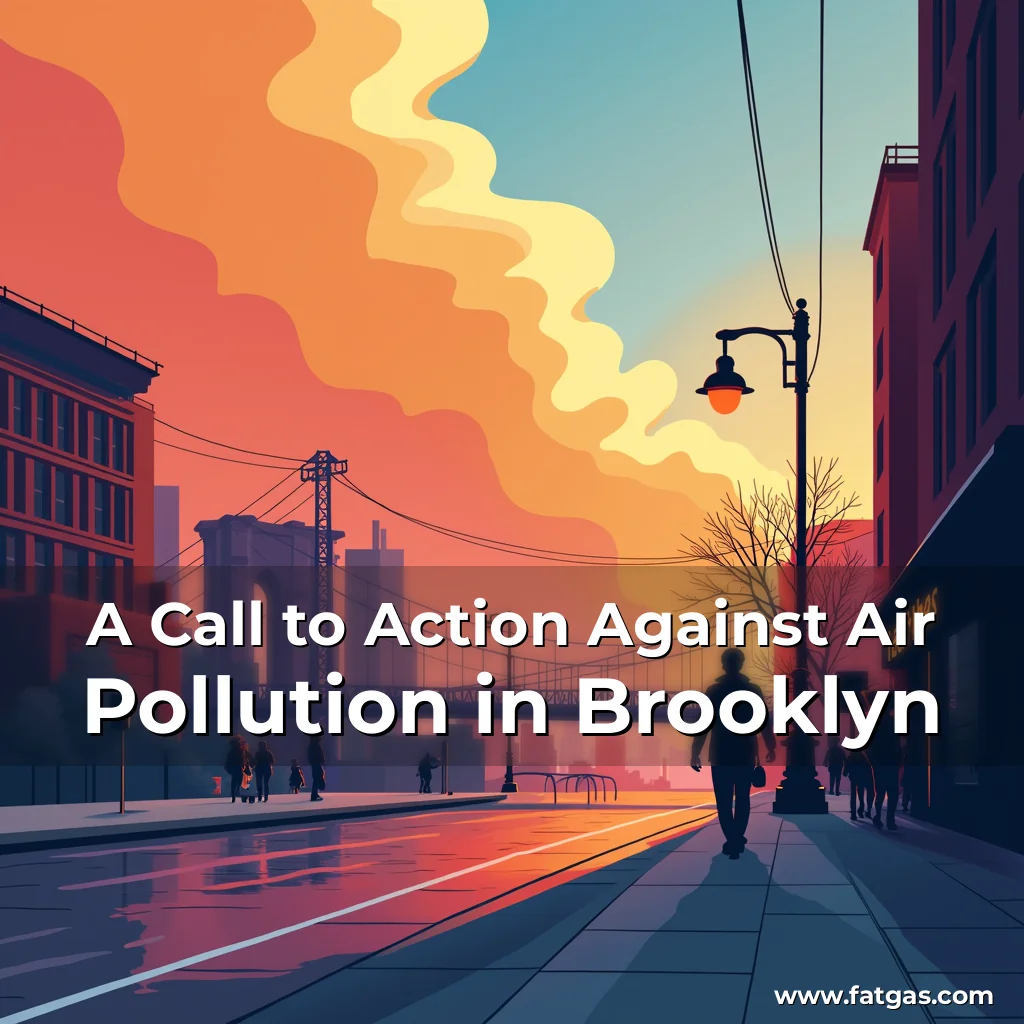
As I stepped out of my apartment in central Brooklyn, the first thing that hit me was a cough. It was a gentle, yet insistent reminder that the air I was breathing in was not the cleanest. It was a symptom of a larger problem, one that affects us all, regardless of our background or socioeconomic status.
The Impact of Air Pollution on Our Community
- According to the Centers for Disease Control and Prevention (CDC), climate change is increasing ground-level ozone layers and particulate matter air pollution in various locations, including Brooklyn.
- The Environmental Protection Agency (EPA) estimates that by 2050, there will be up to 1,000-4,300 premature deaths annually in the United States due to the combined effects of ozone and particle pollution.
- Older adults, children, and people with pre-existing health conditions are the most vulnerable to the health effects of air pollution.
As a resident of Brooklyn, I’ve seen firsthand the impact of air pollution on our community. It’s not just about the health effects; it’s also about the quality of life. We can’t enjoy outdoor activities like visiting Coney Island or Prospect Park without worrying about the air we’re breathing. The thought of spending time with loved ones, watching the sunset, or simply taking a walk in the park is tainted by the knowledge that we’re exposing ourselves to toxic pollutants.
Health Effects of Air Pollution
- Decreased lung function and increased premature deaths are just two of the many health problems associated with air pollution.
- Exposure to particulate matter can cause serious health issues such as lung and heart disease, leading to hospitalizations and even death.
- The American Lung Association notes that children and adults with lung disease are more susceptible to threats such as shortness of breath, wheezing, coughing, and the need for immediate medical attention.
So, what can we do to address this issue? The Environmental Protection Agency (EPA) suggests switching to green and renewable energy sources like solar, wind, and hydropower to reduce air pollution. By making this change, we can significantly improve the air quality in our community.
Using the Air Quality Index to Guide Our Actions
| AQI Value | Air Quality Description |
|---|---|
| 50 or below | Good air quality |
| 51-100 | Unhealthy for sensitive groups |
| 101-150 | Unhealthy |
| 151-200 | Unhealthy for the general population |
| 201-300 | Unhealthy |
| 301 and above | Hazardous air quality |
When the air quality index is unhealthy, we can take steps to reduce our exposure. This might mean choosing less intense activities, taking more breaks, and rescheduling activities to a time when outdoor air quality is better. We can also develop an urban forest by planting trees, which can help reduce air pollution.
A Call to Action
Every single one of us has a role to play in reducing air pollution and creating a healthy environment for ourselves and future generations. By making conscious choices and taking action, we can make a difference. So, let’s come together and take the first step towards a cleaner, healthier Brooklyn.
As I looked out at the Brooklyn skyline, I saw a community that is capable of great things. We can do this.