The Dark Side of Generative AI
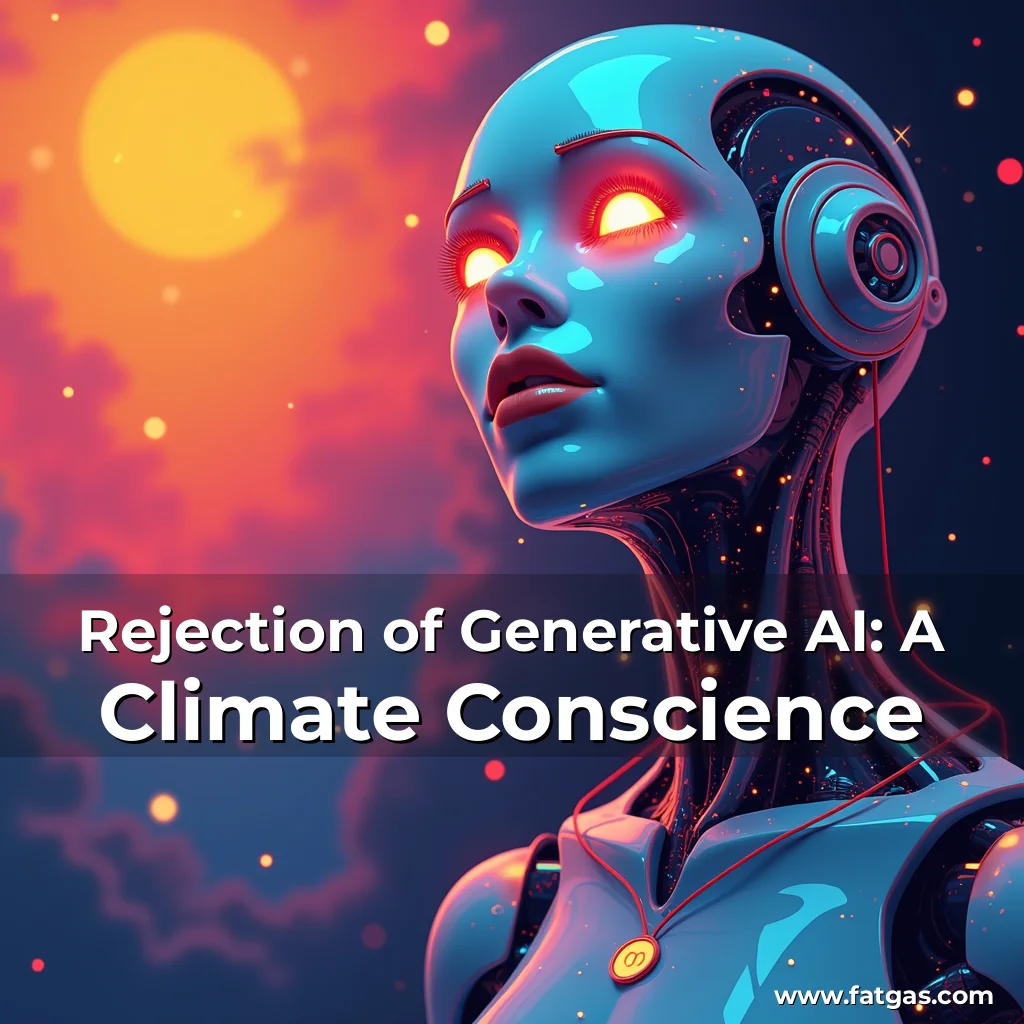
Powerful generative AI models have environmental consequences that cannot be ignored.
*
- A single ChatGPT query consumes nearly 10 times as much energy as a typical Google search.
- It takes about half a litre of water to process 20 to 50 queries.
- Data centres are buildings full of computer servers that churn through huge amounts of electricity all over the globe.
- Data centres consumed about 460 terawatt-hours (TWh) in 2022 alone.
- Data centres could consume between 600TWh and 1,000TWh by 2026.
“But collectively, everyone doing it is hugely significant,”
Dr Ascelin Gordon, Senior Lecturer at RMIT University’s School of Global, Urban and Social Studies
The environmental impact of generative AI is a pressing concern for many Australians. While AI can support climate science and potentially groundbreaking environmental research, it also has the potential to do serious damage. Generative AI models need massive computational power to train and run them, so they rely on data centres – buildings full of computer servers – that churn through huge amounts of electricity all over the globe. This has significant environmental consequences, including energy consumption and water usage.
- Data centres consumed about 460 terawatt-hours (TWh) in 2022 alone.
- Data centres could consume between 600TWh and 1,000TWh by 2026.
“You have no choice about that. If you use Google, you’re getting the generative AI summary whether you want it or not,” Dr Ascelin Gordon, Senior Lecturer at RMIT University’s School of Global, Urban and Social Studies
Many Australians are concerned about the environmental impacts of generative AI, and some are opting out of the AI revolution. More than 75 per cent of Australians aged 16-25 are worried about climate change, and two-thirds say climate concerns are having a negative impact on youth mental health. “Young people are thinking really deeply about how to live well in a world that’s increasingly fraught with environmental crises,” Dr Chloe Watfern, Postdoctoral Fellow at the Black Dog Institute
The environmental impact of generative AI is not just a concern for the environment; it also has significant social and mental health implications. Eco-anxiety rates are rising as young Australians grapple with the climate crisis and contributors like the AI boom. “It can become debilitating,” Dr Chloe Watfern, Postdoctoral Fellow at the Black Dog Institute
What can be done?
In an ideal future, Dr Ascelin Gordon wants to see AI companies adopt energy and water efficiency ratings like those found on household appliances so consumers can make informed decisions about their use. He also advocates for businesses to be required to produce regular, transparent sustainability reports. “There’s no cut and dry, easy answer to all this. The main thing is just for people to be aware of the environmental considerations of AI,” Dr Ascelin Gordon, Senior Lecturer at RMIT University’s School of Global, Urban and Social Studies
“For people to consciously reduce their footprint by renouncing use of generative AI … is certainly a good and inspiring thing,” Dr Ascelin Gordon, Senior Lecturer at RMIT University’s School of Global, Urban and Social Studies
The jobs at most risk of being replaced by AI
Dr Chloe Watfern advocates for accurate and psychologically safe climate education for young Australians as eco-anxiety rates continue to rise.
She also joined more than 100 mental health professionals, doctors, educators, researchers, and youth leaders who spoke out against misinformation around climate change and distress in an open letter last week.
“It is not climate science education that is causing distress, but the lived experience of climate change itself, and the failure of leaders to act,” Dr Chloe Watfern, Postdoctoral Fellow at the Black Dog Institute
Watfern hopes that in the years to come, leaders will act in the best interests of the young people who will one day soon inherit this planet.
DOWNLOAD THE 9NEWS APP: Stay across all the latest in breaking news, sport, politics and the weather via our news app and get notifications sent straight to your smartphone.