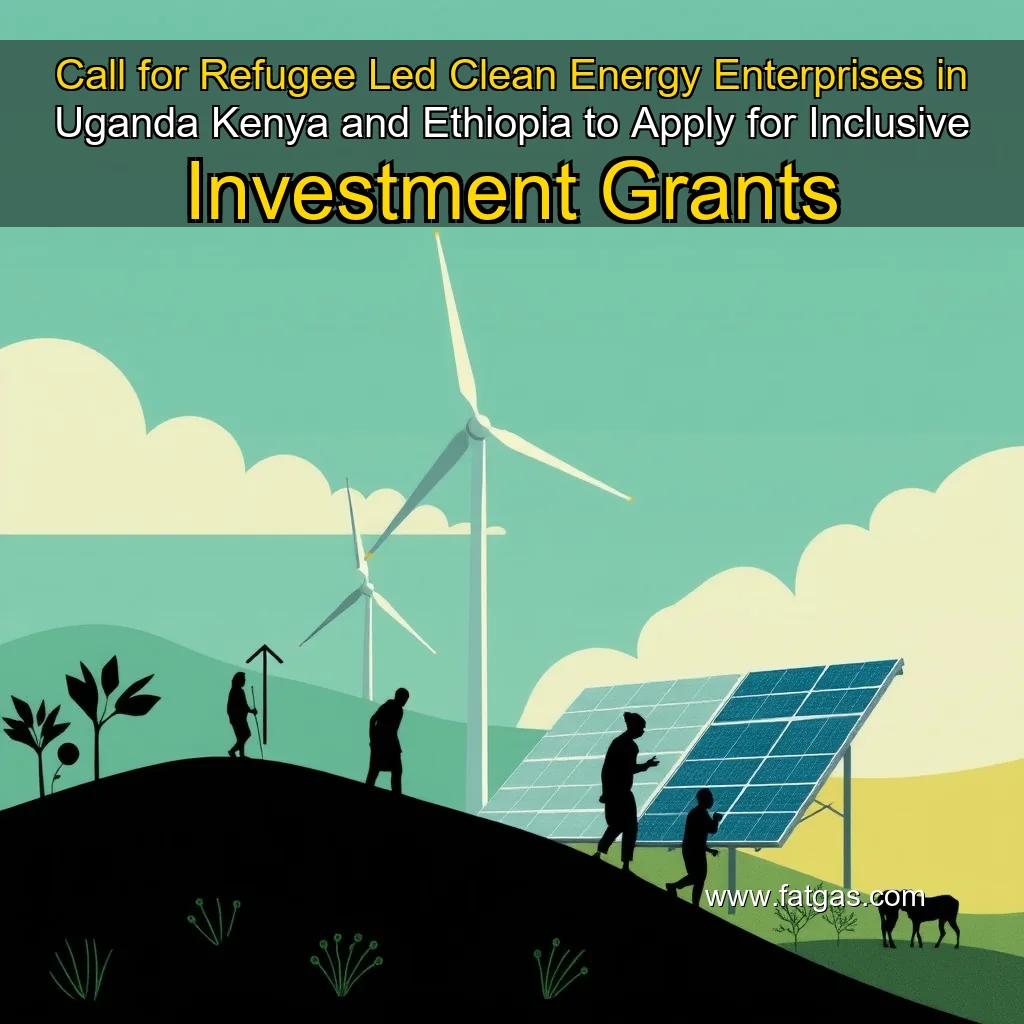
Refugee-Led Clean Energy Enterprises Can Address the Challenges Faced by Refugees and Host Communities Worldwide.
The Need for Inclusive Investment in Refugee-Led Clean Energy
The displacement of people due to conflict, climate change, and other factors has led to a significant increase in refugee populations worldwide. In Africa, Uganda, Kenya, and Ethiopia are among the countries hosting large numbers of refugees. The challenges faced by these refugees, including limited access to basic services, lack of livelihood opportunities, and vulnerability to climate change, necessitate innovative solutions. The refugee-led clean energy enterprises in Uganda, Kenya, and Ethiopia are well-positioned to address these challenges, as they are driven by local communities and have a deep understanding of the local context. These enterprises can provide clean energy solutions, such as solar power, to refugees and host communities, promoting energy access and reducing greenhouse gas emissions.*
Eligibility Criteria and Application Process
To be eligible for the Inclusive Investment Pilots grants, refugee-led clean energy enterprises must meet specific criteria:
This initiative aims to address the energy access gap in refugee camps and host communities.
The Challenge of Energy Access in Refugee Camps
Energy access is a pressing concern in refugee camps, where millions of people lack reliable and affordable electricity. The lack of energy access hinders economic development, education, and healthcare. In refugee camps, energy access is often limited to basic lighting and communication, but it is insufficient to support the needs of the community. The World Bank estimates that 1.4 billion people worldwide lack access to electricity, with 90% of them living in rural areas. In refugee camps, the energy access gap is even more pronounced, with some camps relying on generators that are expensive, polluting, and unreliable.*
The Solution: Ashden’s Pilot Program
Ashden’s new pilot program is designed to address the energy access gap in refugee camps and host communities. The program provides financial inclusion to refugee entrepreneurs and organizations, enabling them to develop and implement innovative energy access solutions. The program offers funding, technical assistance, and communications support to successful applicants. The funding will be used to develop and deploy energy access solutions, such as solar-powered lighting and communication systems. The technical assistance will help applicants to design, implement, and maintain their energy access solutions.
The Howden Foundation supports a wide range of charitable causes and initiatives, with a focus on education, health, and the environment. The initiative is also supported by the University of Cambridge, which has a long history of collaboration with the Howden Foundation.
The Initiative: A Collaborative Effort
The initiative is a collaborative effort between the Howden Foundation and the University of Cambridge, with the goal of promoting sustainable agriculture practices in developing countries.
Introduction
The world is facing a critical juncture in its energy landscape. Climate change, energy poverty, and the need for sustainable development have created a pressing need for innovative solutions. Amidst this backdrop, refugee-led clean energy projects have emerged as a beacon of hope.