Understanding the Earth’s Orbit and Axial Tilt
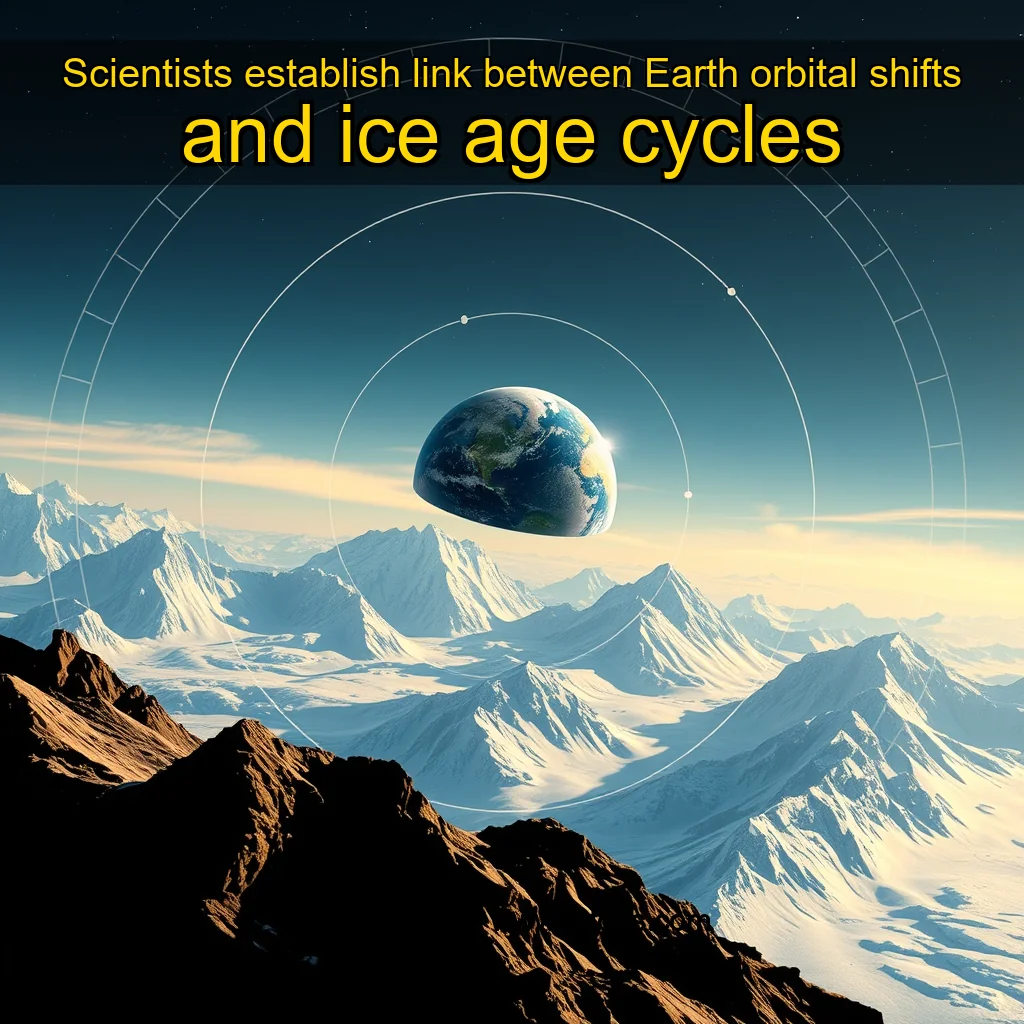
The Earth’s orbit is not a perfect circle, which affects the amount of solar energy the planet receives. This variation in energy input influences the climate, leading to glacial and interglacial periods. The axial tilt of the Earth, which is approximately 23.5 degrees, also plays a crucial role in determining the climate. The tilt causes the amount of solar energy that reaches the Earth’s surface to vary throughout the year.
The Wobble of the Earth’s Axis
The Earth’s axis wobbles due to the gravitational pull of the other planets in our solar system. This wobble, also known as the precession of the equinoxes, affects the position of the North Pole star and the distribution of solar energy on the Earth’s surface. The wobble is relatively slow, taking approximately 26,000 years to complete one full cycle.
Correlation with Climate Change
Researchers have identified a correlation between the Earth’s orbit, axial tilt, and wobble, and the periodic adjustments in climate.
Understanding the Earth’s Climate Cycle
The Earth’s climate has always been in a state of flux, with periods of warming and cooling occurring over millions of years. One of the most significant climate cycles is the glacial-interglacial cycle, which has been ongoing for at least 2.5 million years. This cycle is characterized by the repeated formation and melting of ice sheets, resulting in glacial ‘ice ages’ and mild warm periods like today.
The Role of Earth’s Orbit
The Earth’s orbit around the Sun plays a crucial role in initiating and concluding ice ages. The tilt of the Earth’s axis, the shape of its orbit, and the amount of solar radiation it receives all contribute to the climate cycle. For example:
However, human activities have disrupted this natural process, leading to a rapid warming trend that is now causing concern among scientists and policymakers.
The Natural Cycle of Glaciation
Glaciation is a natural process that occurs when the Earth’s climate cools, causing ice sheets to form and expand. This process is driven by changes in the Earth’s orbit, volcanic eruptions, and variations in the Sun’s energy output.
Understanding the Current Climate State
The current climate state is characterized by rising global temperatures, more frequent and intense heatwaves, and altered precipitation patterns. These changes are largely driven by human activities, such as burning fossil fuels and deforestation, which release large amounts of carbon dioxide into the atmosphere. The resulting global warming has significant impacts on ecosystems, human health, and the economy. Rising sea levels, more frequent natural disasters, and changes in weather patterns are just a few of the consequences of human-induced climate change. The Arctic is warming at a rate twice as fast as the global average, with some areas experiencing temperatures 3-4°C higher than the average. The consequences of climate change are not limited to the polar regions; they are felt globally, with impacts on agriculture, water resources, and human migration.
The Role of Natural Climate Variability
Natural climate variability refers to the fluctuations in the Earth’s climate that occur over long periods of time, often in response to changes in the planet’s orbit, volcanic eruptions, or other external factors. These natural fluctuations can have significant impacts on the climate, but they are typically much slower than the changes caused by human activities. Natural climate variability can lead to periods of cooling or warming, but these changes are usually much slower than the rapid warming caused by human-induced climate change. The Earth’s climate has gone through many natural cycles of warming and cooling over the past few million years, with the most recent ice age ending about 11,700 years ago.
“We can use the ice cores to look at the past 800,000 years of climate history, and then use that information to make predictions about what might happen in the past 100 years.”
Understanding the Role of Ice Cores in Climate Research
Ice cores extracted from the Antarctic and Greenland ice sheets contain a wealth of information about past climate conditions. These cores are essentially vertical columns of ice that have formed over thousands of years, with each layer representing a specific period of time. The ice cores are incredibly valuable for climate research because they provide a unique window into the Earth’s past climate history.