The Role of Foreign Actors
Foreign actors, including governments and corporations, have been accused of funding climate denialist groups and think tanks. These actors often have a vested interest in undermining climate policies that could harm their economic or geopolitical interests. • The fossil fuel industry has been a major player in climate denialism, with many companies and trade associations funding think tanks and advocacy groups that promote climate skepticism. • Governments, particularly those with significant fossil fuel reserves, have also been accused of supporting climate denialist efforts.
The fund will provide financial assistance to countries that have suffered losses due to climate-related disasters.
The Fund’s Mechanism
The loss and damage fund will be established through a mechanism that involves donor contributions, insurance, oil and gas taxes, and debt relief.
This is not just about denying the existence of climate change, but about undermining the credibility of climate science and the ability of governments to act.
A New Era of Climate Politics
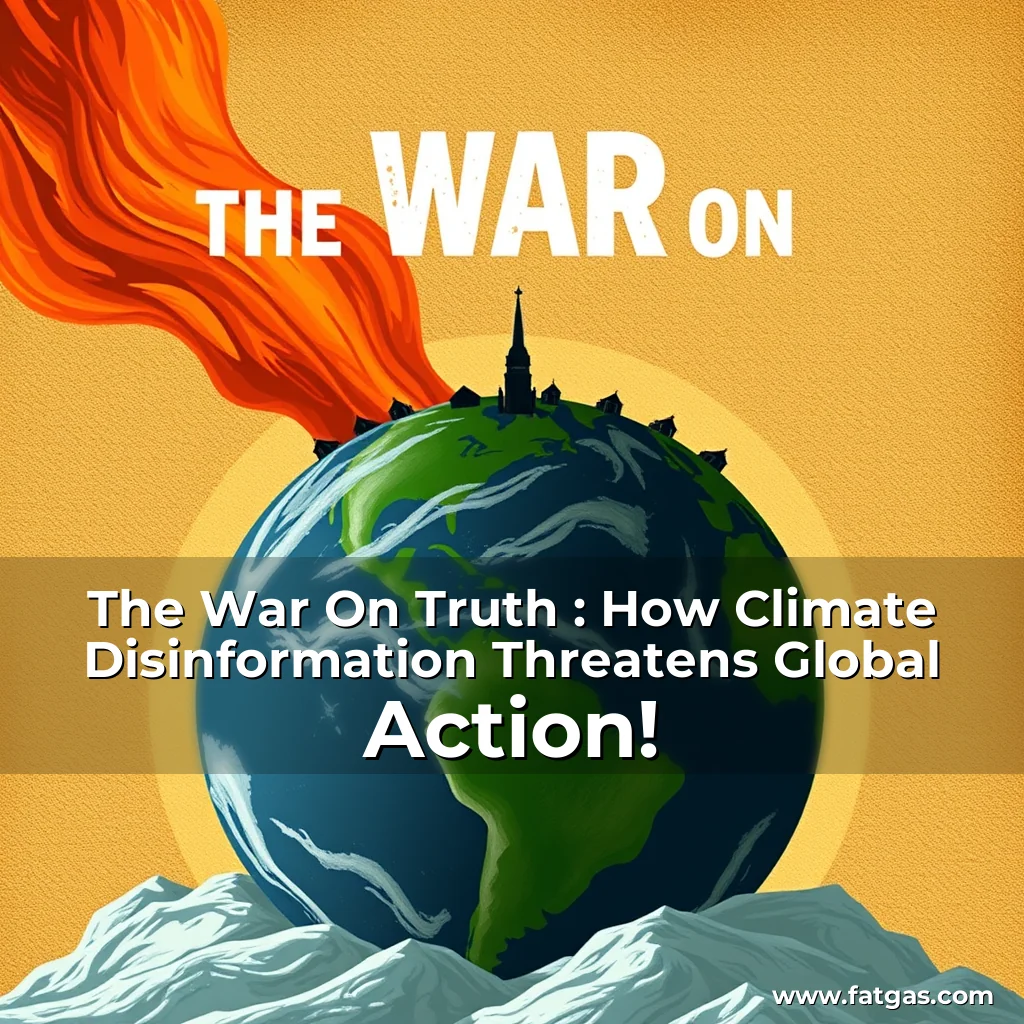
The rise of strategic climate disinformation represents a significant shift in the way climate change is addressed. Gone are the days of simplistic, straightforward denialism. Today, climate disinformation is a sophisticated and multi-faceted phenomenon that seeks to manipulate public opinion and influence policy decisions. • It is often funded by state-backed actors and major corporations with vested interests in the status quo. • This disinformation is designed to create confusion, sow doubt, and undermine the credibility of climate science. • It is not just about denying the existence of climate change, but about creating a sense of uncertainty and fear that can be exploited to block climate policies.
A Web of Influence
State-backed actors, including governments and intelligence agencies, play a significant role in spreading disinformation about climate change. These actors often use their resources and networks to amplify false or misleading information, creating a false narrative that can be difficult to debunk. • They may use social media, online forums, and other digital platforms to disseminate disinformation. • They may also use traditional media outlets, such as newspapers and television stations, to spread false information.
A multi-faceted approach is required.
Understanding the Climate Crisis
The climate crisis is a pressing global issue that requires immediate attention and collective action.
The consequences of inaction will be catastrophic. The science is clear: human activities, particularly the burning of fossil fuels and deforestation, are releasing massive amounts of greenhouse gases into the atmosphere, leading to a global average temperature increase of over 1°C since the late 19th century. The effects are far-reaching and devastating, from rising sea levels and more frequent natural disasters to altered ecosystems and loss of biodiversity.
This stark reality exposes the influence of a small group of powerful entities. The report highlights the critical need for governments to regulate disinformation, especially in the context of climate change. Governments must address the root cause of disinformation by promoting transparency and accountability. This can be achieved through measures such as: 1) Regulating social media platforms to remove false and misleading information. 2) Implementing climate change education programs. 3) Encouraging media literacy. 4) Strengthening environmental laws and enforcement. 5) Supporting independent media outlets. 5) Conducting regular audits to identify and address disinformation. These measures can help reduce the spread of disinformation and promote a more informed public discourse. The report emphasizes that addressing disinformation is not a partisan issue, but a global challenge that requires cooperation among governments, civil society, and the private sector. The WEF’s report highlights the urgent need for collective action to mitigate the risks of disinformation and promote a more sustainable and equitable future for all. The World Economic Forum’s (WEF) 2025 Global Risks Report has identified disinformation as one of the top global risks, posing a significant threat to global stability. Disinformation, a deliberate strategy employed by vested interests, aims to maintain the status quo and prevent meaningful change.
The Rise of Climate Change Denial
Climate change denial has been a persistent issue in the United States, with some prominent figures openly dismissing the scientific consensus on climate change. The CPAC conference provided a platform for these individuals to express their views, sparking widespread criticism and concern. • The denial of climate change has been fueled by misinformation and a lack of scientific understanding.
The same month, the U.S. Department of Homeland Security and the Federal Bureau of Investigation (FBI) launched a joint investigation into RT and its affiliates, alleging that they were spreading disinformation and propaganda to influence the 2020 U.S. presidential election. In 2022, the U.S. Department of Justice indicted 18 Russian nationals and entities for their role in interfering with the 2020 U.S.
The Rise of a Climate Denier
Jusper Machogu, a Kenyan farmer, has become a prominent figure in the country’s politics, but his rise to fame is shrouded in controversy. He has gained a significant following by rejecting climate science and promoting the expansion of fossil fuel production.
Just ten publishers are responsible for 69% of all climate denial content on Facebook. Algorithmic bias ensures that misleading narratives spread faster than factual information. Artificial intelligence and bot networks are supercharging these efforts.
Greenwashing can take many forms, including the use of eco-friendly packaging, the promotion of products that are not actually sustainable, and the exaggeration of a company’s environmental achievements. ##
The Dangers of Greenwashing
Greenwashing can have serious consequences for the environment, consumers, and the economy. It can lead to a false sense of security among consumers, causing them to make uninformed purchasing decisions that ultimately harm the environment. • It can also lead to a lack of investment in actual environmental initiatives, as companies may feel that they are already green and do not need to make further efforts. • Furthermore, greenwashing can undermine the credibility of environmental organizations and advocacy groups, making it more difficult for them to achieve their goals.
The Imperative of Climate Reporting in Nigeria
Climate change is a pressing global issue that demands immediate attention and action. In Nigeria, the effects of climate change are far-reaching and devastating, from droughts and floods to heatwaves and landslides.
The Urgent Need for Climate Action
The window for taking effective action to mitigate climate change is rapidly closing. The consequences of inaction will be catastrophic, with rising sea levels, more frequent natural disasters, and unpredictable weather patterns becoming the new norm.
Or will we take collective action to protect our environment? The world is facing an unprecedented crisis, with the consequences of climate change, pollution, and environmental degradation becoming increasingly apparent.