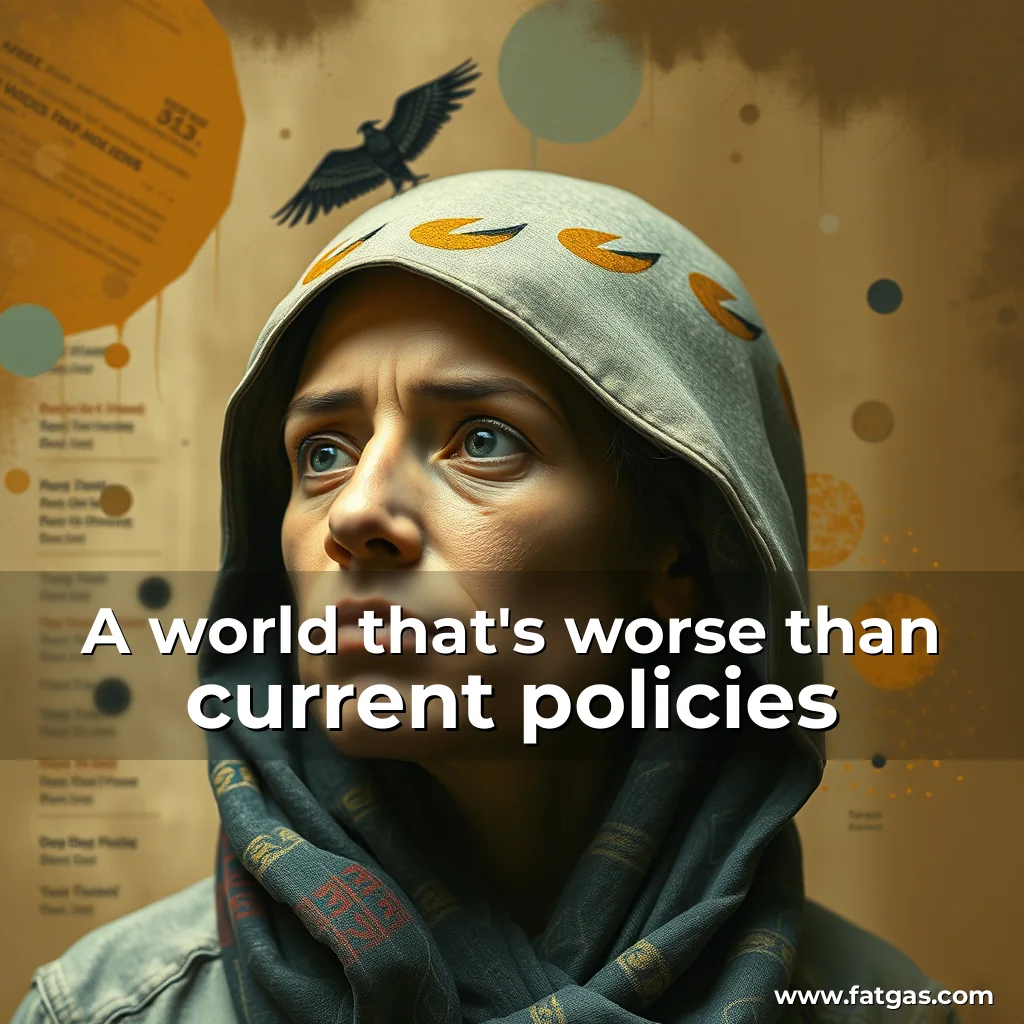
A worse-than-current-policy world? The world has made real progress toward tackling climate change in recent years, but a closer look at the worst-case scenario revealed by the Shared Socioeconomic Pathways suggests that we may be heading for a world that’s worse than current policies.
- Declining clean energy cost
- Rapid deployment of clean energy technologies
- Stronger climate policy trends
These factors have contributed to a reassessment of likely climate outcomes this century, with the world now likely heading toward less than 3C warming by 2100 under current policies – compared to the 4C warming that seemed more plausible 15 years ago. However, the best-case scenario isn’t a guarantee, and the world could still be heading toward a worse-case future if we don’t make progress in the coming decades.
Enter SSP3 – A world of regional rivalry
Back in 2016, the global energy modeling community set out to explore a set of socioeconomic futures that could shape the 21st century, impacting both our emissions and our ability to mitigate and adapt to climate change. They produced five different “Shared Socioeconomic Pathways”, or SSPs, that involved different underlying narratives of the future, levels of economic and population growth, and barriers to international cooperation and technological development. These SSPs included a equitable, sustainability-focused world of SSP1, a current-trends-continue SSP2 world, a world of high inequality (SSP4), and a world of rapid growth drawing heavily on fossil fuels (SSP5). But the world with the worst damages from climate change combined high inequality, high emissions, and low economic growth.
SSP3: Regional Rivalry – A Rocky Road
A resurgent nationalism, concerns about competitiveness and security, and regional conflicts push countries to increasingly focus on domestic or, at most, regional issues. Policies shift over time to become increasingly oriented toward national and regional security issues. Countries focus on achieving energy and food security goals within their own regions at the expense of broader-based development. Investments in education and technological development decline. Economic development is slow, consumption is material-intensive, and inequalities persist or worsen over time. Population growth is low in industrialized and high in developing countries. A low international priority for addressing environmental concerns leads to strong environmental degradation in some regions.
| SSP3 Characteristics | Description |
|---|---|
| High inequality | Poorer populations face greater challenges in adapting to climate change, leading to increased vulnerabilities and environmental degradation. |
| Low international cooperation | Lack of global coordination leads to a “race to the bottom” in environmental regulations, exacerbating climate change. |
| Slow economic growth | Economic development is sluggish, leading to increased consumption of material goods and lower investment in education and technology. |
Why SSP3 is unlikely, but still a possibility
While SSP3’s characteristics are concerning, they are not universally accepted as a likely outcome. However, there are some factors that make SSP3 a possibility, despite the decline in clean energy costs and the increase in rapid deployment and climate policy trends.
- Global population growth
- Dramatic expansion of coal use
- Low international cooperation
Despite these factors, it’s possible that progress can still be made in reducing emissions and avoiding a worse-case future.
Conclusion
The world has made real progress toward tackling climate change in recent years, but a closer look at the worst-case scenario revealed by the Shared Socioeconomic Pathways suggests that we may be heading for a world that’s worse than current policies. While SSP3’s characteristics are concerning, they are not universally accepted as a likely outcome. However, it’s possible that progress can still be made in reducing emissions and avoiding a worse-case future. By understanding the SSP3 scenario and taking steps to mitigate its effects, we can work towards a more sustainable and equitable world for all.