
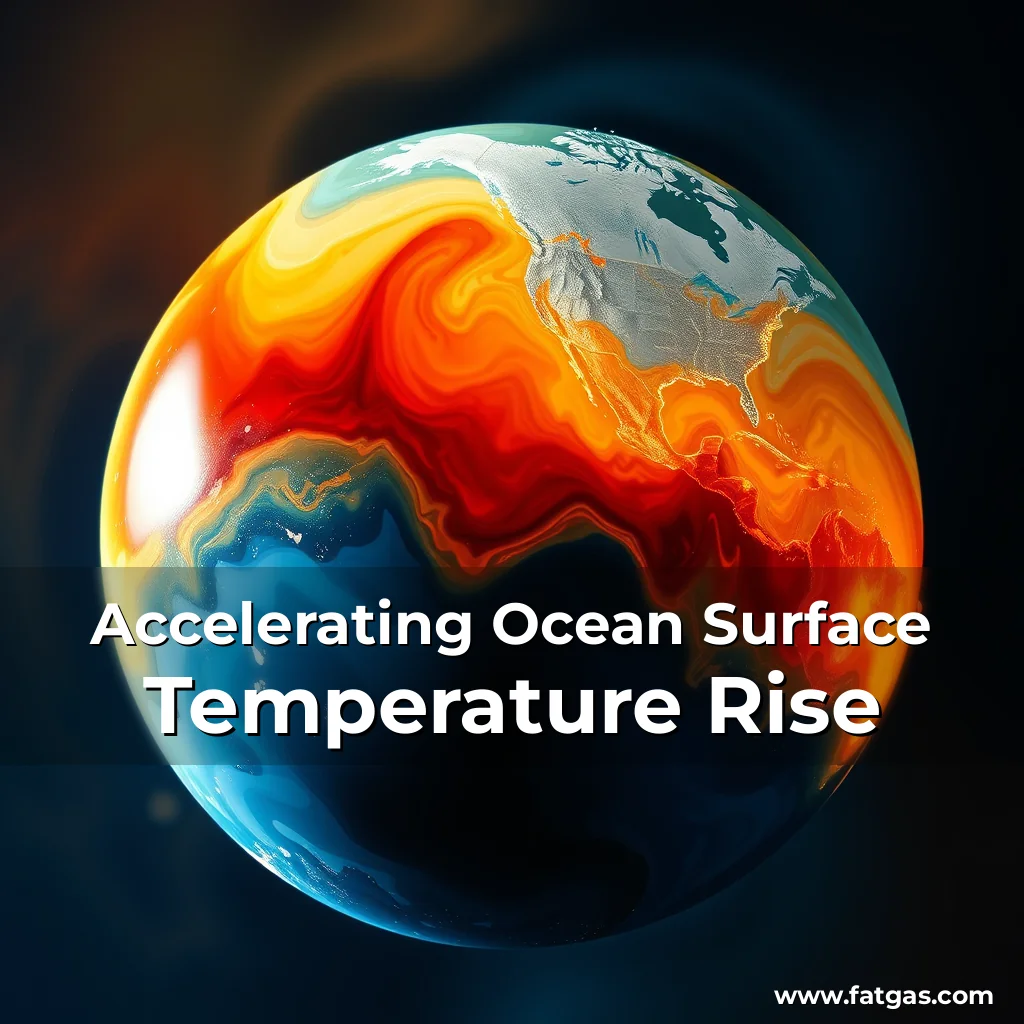
Satellite Observations Reveal Widespread Warming
Satellite-based observations have provided conclusive evidence of a significant and accelerating rise in global sea surface temperatures (SSTs) over the past few decades.
- Between 1985 and 1989, the rate of SST increase was estimated to be 0.06 degrees Celsius per decade.
- The average increase in SST between 2019 and 2023 was 0.27 degrees Celsius per decade, marking a more than fourfold increase in ocean surface warming over the past 40 years.
This warming trend was identified using a comprehensive dataset compiled by the European Space Agency’s Climate Change Initiative (CCI), which drew from the satellite archives of 20 infrared radiometers aboard various platforms. The dataset, covering the period from 1980 to 2023, provides robust and consistent evaluation of ocean surface temperatures worldwide.
| Platform | Number of Infrared Radiometers |
|---|---|
| ERS-1, ERS-2, Envisat, and Copernicus Sentinel-3 | 20 |
The study attributes the accelerated warming largely to the growing concentration of greenhouse gases in the atmosphere, which has caused an imbalance between incoming solar energy and outgoing radiation, resulting in the accumulation of heat in Earth’s climate system.
“It’s a perfect storm,” said Chris Merchant, lead researcher from the University of Reading. “We’re seeing an acceleration of ocean warming that’s far beyond what we expected. The implications are huge – we’re talking about extreme weather events, sea level rise, and ecosystem disruption. We need ongoing monitoring and data improvements to ensure our climate models can accurately reflect future temperature increases.”
While natural events like El Nino, volcanic eruptions, and solar fluctuations can influence SSTs on shorter timescales, the research found that these effects do not disrupt the long-term trend. Key Finding
The study clearly identifies the increasing accumulation of planetary energy as the dominant driver of long-term sea surface warming, while short-term variations from El Nino, volcanic activity, and solar changes add variability but do not alter the overall accelerating trend. The latest analysis supports the objectives of ESA’s MOTECUSOMA project, which seeks to better understand Earth’s energy imbalance and its broader implications for climate change.
In the context of climate change, acceleration refers to an increase in the rate of change, such as the rate of sea surface temperature rise.
- Accelerating
- Increasing the rate of change, such as the rate of sea surface temperature rise.
The long-term SST dataset is publicly accessible via ESA’s CCI data portal, with climate-model-ready versions available through the Obs4MIPs framework. Improving Climate Projections
The findings of this study emphasize the need for accurate climate projections, as increasing ocean heat uptake intensifies extreme weather events, disrupts ecosystems, and accelerates sea level rise.
- Increasing ocean heat uptake intensifies extreme weather events.
- Disrupts ecosystems and accelerates sea level rise.
Addressing these challenges requires continued observation and model refinement, which is an ongoing goal of the MOTECUSOMA project.

news is a contributor at FatGas.com. We are committed to providing well-researched, accurate, and valuable content to our readers.