Changzhou’s Zero-Carbon Park in Liyang: A Beacon of Sustainability
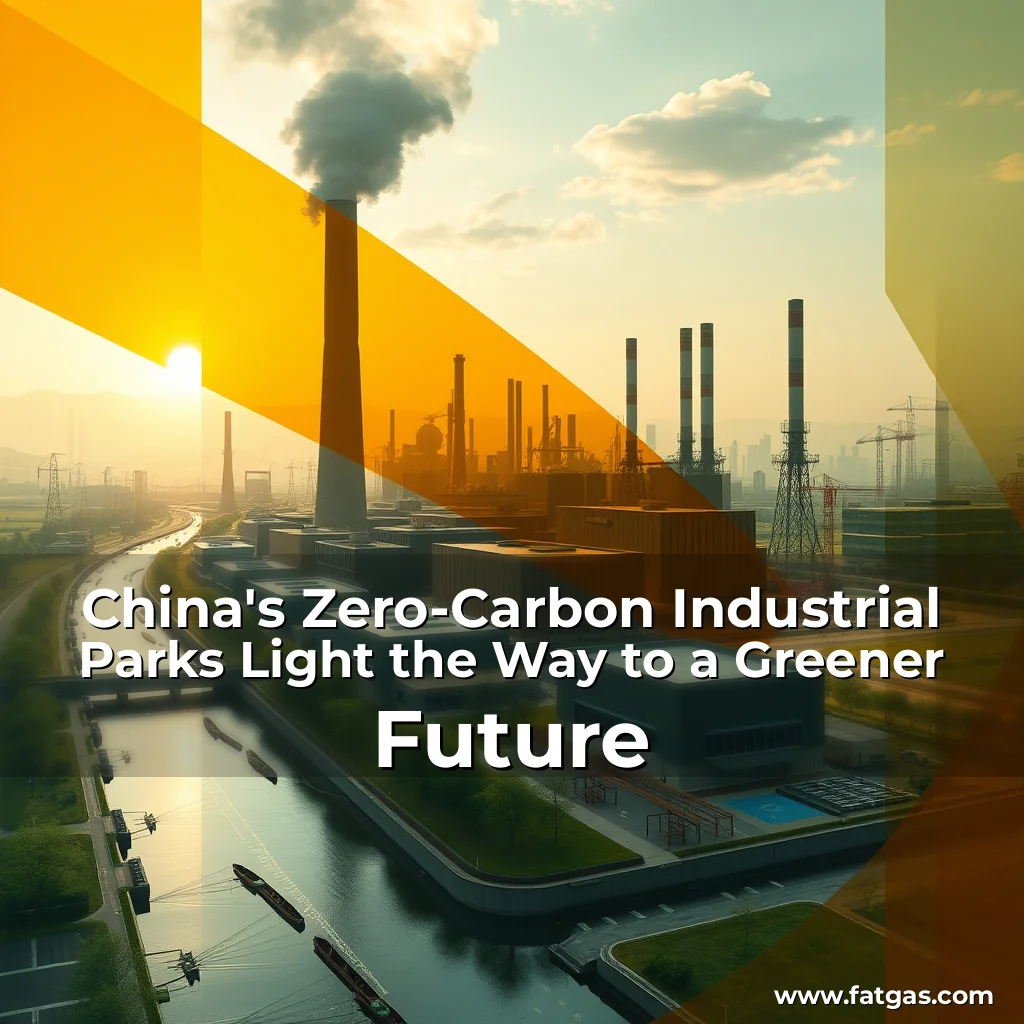
A 100-hectare industrial park in Liyang, a county-level city under Changzhou in east China’s Jiangsu Province, is a prime example of a zero-carbon industrial park. The park has installed around 77,000 square meters of photovoltaic panels, generating 5.2 million kilowatt-hours of green electricity annually. This eco-friendly scene is especially fitting on Tuesday, the 56th Earth Day, as it showcases the park’s commitment to sustainability. The park’s general manager, Li Jie, explains that the park is diversifying its clean energy sources to include wind and hydro power to achieve net-zero carbon emissions. The park’s smart management systems and circular economy practices also contribute to its sustainability.
Beyond Changzhou: A Nationwide Push for Zero-Carbon Industrial Parks
China’s Central Economic Work Conference has called for ramped-up efforts to promote a green transition across all sectors, including the establishment of zero-carbon industrial parks. According to Wu Wei, an associate professor at the China Institute for Studies in Energy Policy at Xiamen University, such parks not only drive low-carbon development but also enhance enterprises’ innovation capability, energy efficiency, and informatization level. Several cities and provinces have included zero-carbon park construction in their 2025 government work reports, including Shanghai, Beijing, Guangxi, Yunnan, and Fujian.
Zero-Carbon Practices: A Key Engine for China’s High-Quality Economic Growth
According to Wu Wei, zero-carbon practices are driving innovation and efficiency in China’s enterprises. For example, Nari-Relays Electric, a local power electronics company, has leveraged AI and cloud computing to monitor and optimize energy use in real time, resulting in significant cost reductions and efficiency improvements.
Nari-Relays Electric: A Pioneering Example of Zero-Carbon Innovation
Nari-Relays Electric has cut over 21,000 tonnes of carbon dioxide emissions and saved nearly 7,300 tonnes of standard coal since 2023. The company’s efforts have saved it nearly 20 million yuan (about 2.77 million U.S. dollars) in costs.
Microgrids: The Backbone of Zero-Carbon Parks’ Operation
Microgrids are a cornerstone of zero-carbon parks’ operation. Changzhou has completed 39 microgrid projects with a total investment of 1.18 billion yuan and plans to construct more such projects in the coming years.
Global Recognition for China’s Green Technologies
China’s green technologies are now reaching global markets. NR Electric, for example, has provided energy storage solutions to over 30 countries, including Britain, Japan, and Saudi Arabia. At Britain’s Richborough Energy Park, its technology has helped reduce carbon emissions by over 10,000 tonnes — the greatest reduction among all battery energy-storage projects in the country in 2024.
A Surge in Zero-Carbon Parks in 2025
With China’s advancement of the dual carbon goals, it is expected to see a surge in zero-carbon parks in 2025. According to Ding Hong, vice president of Jiangsu’s provincial society of the urban economy, advances in distributed solar photovoltaics, energy storage, and smart energy management platforms will significantly lower costs of zero-carbon parks’ construction and operation.
Low-Carbon Innovations Go Global
In Jiangsu’s Suzhou Industrial Park, a joint China-Singapore zero-energy building showcases the possibilities of future urban architecture. Built using sustainable materials, the structure is part of the China-Singapore Green Digital Hub, a 6.7-billion-yuan project launched last November to boost green industries and emerging services.
Global Recognition for China’s Zero-Carbon Buildings
The joint China-Singapore zero-energy building has been certified by standards organizations in both the United States and Singapore. This highlights that China’s carbon reduction technologies have gained worldwide recognition.
China’s Green Technologies Reach Global Markets
China is now collaborating on green energy projects with over 100 countries and regions. According to the International Renewable Energy Agency, the average global cost per megawatt-hour for wind power has plummeted over the last decade by over 60 percent, and by 80 percent for solar power.
A Blueprint for Sustainable Development
Erik Berglof, chief economist at the Asian Infrastructure Investment Bank, notes that China’s journey offers a blueprint for sustainable development that other countries can follow.
Zero-Carbon Industrial Parks: A Key to China’s Future
China’s zero-carbon industrial parks are lighting the way to a greener future. With their commitment to sustainability, innovation, and efficiency, they are driving China’s high-quality economic growth and setting a global example for sustainable development. As the country continues to advance its dual carbon goals, it is clear that zero-carbon industrial parks will play a key role in China’s future.