The Rise of Climate Anxiety
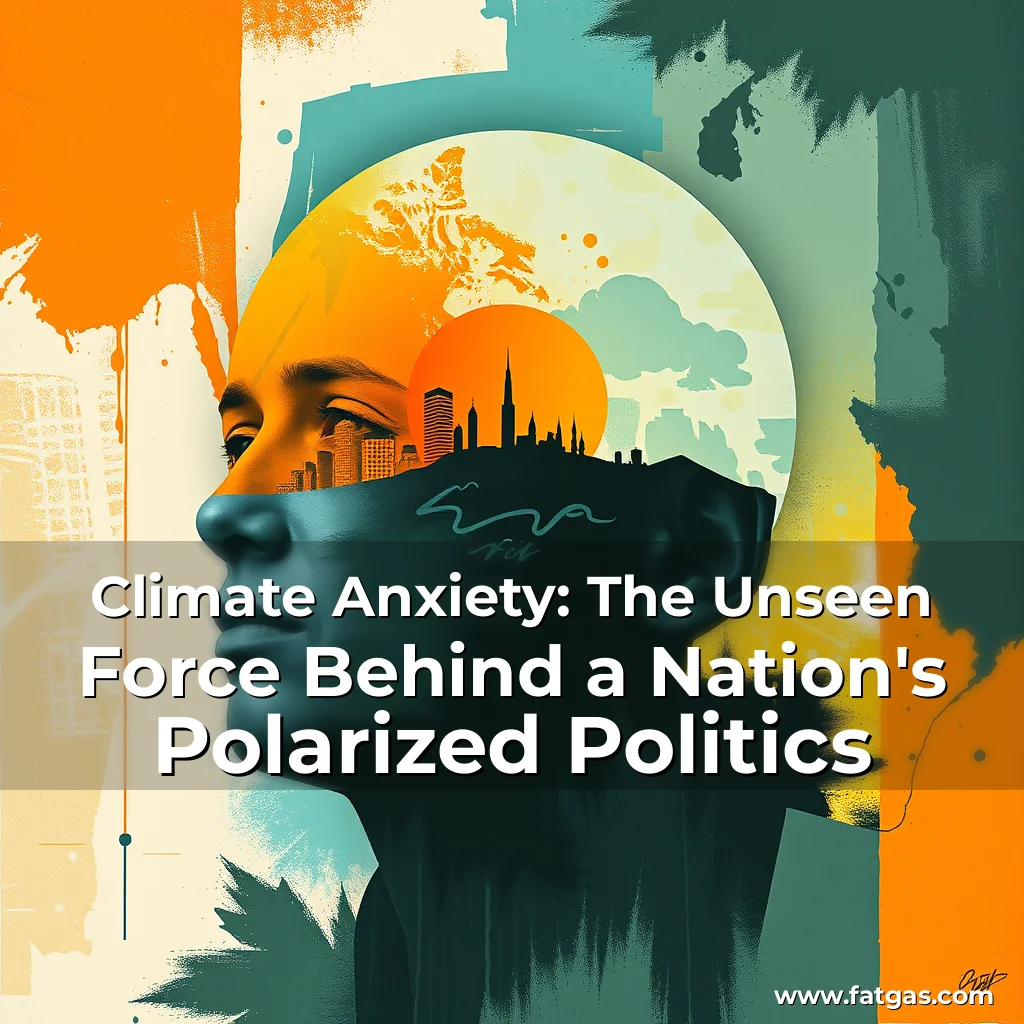
In recent years, a new term has emerged to describe the widespread feeling of unease and fear that has been engulfing a young generation: climate anxiety. This phenomenon is not just a local issue, but a national concern that is being fueled by a complex interplay of factors, including politics, education, and media. A Yale study has revealed that a staggering 63.3% of U.S. adults are worried about global warming, with anxiety concentrated in large metropolitan areas and coastal communities.
- 63.3% of U.S. adults are worried about global warming, according to a Yale study.
- Climate anxiety is concentrated in large metropolitan areas and coastal communities.
- The study highlights the role of politics, education, and media in shaping climate attitudes.
The Politics of Climate Change
The media has played a significant role in shaping public perception of climate change, often presenting it as an existential threat. This has created a feedback loop where the more people are exposed to these narratives, the more anxious they become, and the more they demand action from their government. Education has also been a battleground for climate change propaganda, with schools incorporating climate change into their curricula in a way that often presents a one-sided perspective.
| Political Factors | Media Influence | Education |
|---|---|---|
| Politicians’ rhetoric and policies | Mainstream news outlets and social media | School curricula and environmental education |
The Psychological Impact of Climate Anxiety
Climate anxiety is not just a product of local environmental risks but is heavily influenced by the media and political discourse. Young people, in particular, are being bombarded with apocalyptic narratives that suggest the world is on the brink of collapse. This has led to a generation of individuals who are not only anxious about their future but are also being mobilized into political action based on a sense of impending doom.
“The vast majority of the population exists in some of these green places, but the media and politics often create a sense of distance between reality and lived experience,”
says Jennifer Marlon, executive director of the Yale Center for Geospatial Solutions and senior research scientist at the Yale School of the Environment.
The Agenda Behind Climate Hysteria
Critics argue that climate anxiety is not a natural response to environmental changes but is, in fact, a calculated effort to push a political agenda. The push for big government solutions, such as higher taxes, unaffordable energy, and geoengineering projects, is often presented as the only way to combat climate change. However, these “solutions” are often more about control and power than they are about genuine environmental stewardship.
A Call for Balanced Perspectives
As the debate over climate change continues to heat up, it is crucial for Americans to seek out alternative perspectives from cool and collected people, and to question the narratives being presented by the mainstream media and political establishment. The solution to this manufactured hysteria may not lie in more government intervention but in empowering individuals with accurate information and a balanced view of the science.
By engaging with diverse viewpoints and critically evaluating the information presented to us, we can break free from the grip of climate anxiety and build a more nuanced understanding of the complex issues at hand.
The Yale study serves as a reminder that climate anxiety is not just a product of environmental factors but is also shaped by a complex interplay of politics, education, and media.