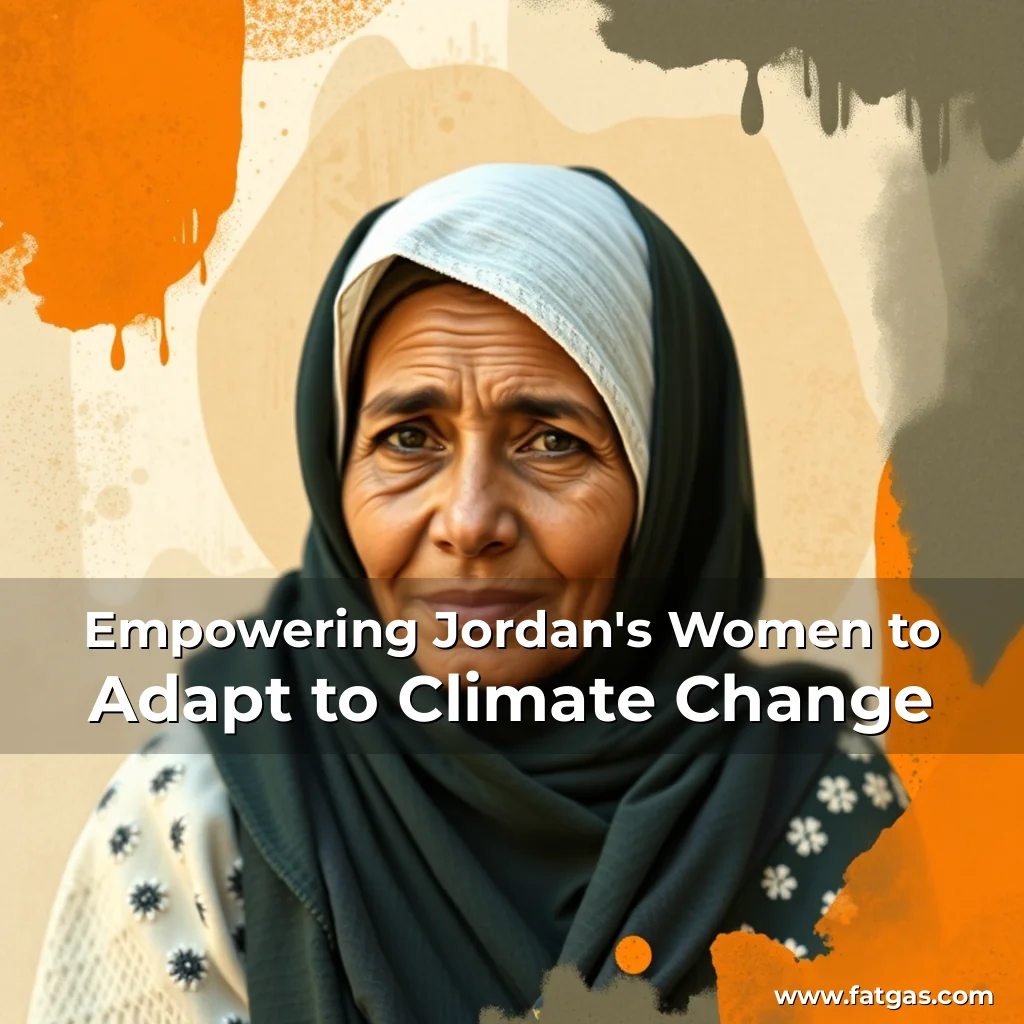
The Food and Agriculture Organisation of the United Nations (FAO) in Jordan, in partnership with Mu’tah University, recently celebrated the graduation of a group of eight women who have completed a six-month training program on climate change adaptation. These women, known as the “Climate Wise Women Agents” (CWWAs), are now certified trainers who will play a crucial role in empowering 400 women across Jordan’s Karak, Madaba, Tafileh, and Ma’an governorates.
Building Resilience to Climate Change
The training program is part of an agreement between FAO and Mu’tah University under the $33.25 million project, “Building Resilience to Cope with Climate Change in Jordan through Improving Water Use Efficiency in the Agriculture Sector” (BRCCJ). This project is funded by the Green Climate Fund (GCF) and implemented by FAO in cooperation with the ministries of Water and Irrigation, Agriculture, Environment, and the UN Development Programme (UNDP).
- The project aims to improve water use efficiency in the agriculture sector, which will help the country’s vulnerable areas to cope with climate change.
- It also seeks to promote sustainable development in Jordan by empowering women and improving their access to resources and information.
The Role of Women in Climate Change Adaptation
Women, as key agents of change in climate adaptation, are playing a central role in this project. They are expected to empower 400 women across the four governorates, enabling them to better adapt to the impacts of climate change, support their families, and promote sustainable development in their communities.
- Women will be trained on climate adaptation strategies, particularly in agriculture and water resource management.
- They will also receive training on how to improve water use efficiency in their households and farms.
Key Partners and Support
The BRCCJ Project has received support from various key partners, including the Green Climate Fund (GCF), the ministries of Water and Irrigation, Agriculture, Environment, and the UN Development Programme (UNDP).
| Partner | Support |
|---|---|
| Green Climate Fund (GCF) | $33.25 million |
| Ministries of Water and Irrigation, Agriculture, Environment, and the UN Development Programme (UNDP) | Implementation and cooperation |
A Message from the FAO Representative
Speaking at the ceremony, FAO Representative in Jordan Nabil Assaf emphasized the importance of investing in women as drivers of change. He stated, “FAO is investing in women as drivers of change. One of our most important initiatives is the BRCCJ project, which includes establishing a cadre of 400 Climate Wise Women to promote climate resilience in vulnerable areas.”
“Climate change has significant negative effects on Jordan due to its geographical location and environmental conditions, particularly water scarcity,” he added.
A Message from the University
Representing the university, Vice President for Scientific Colleges Affairs Ameen Aqel affirmed the university’s commitment to community development. He stated, “The trained women will act as a core group to raise awareness and train 400 women, 100 in each of the four targeted governorates, on climate adaptation strategies, particularly in agriculture and water resource management.”
- The university is committed to supporting the BRCCJ Project and empowering women to become agents of change in climate adaptation.
A Message from the Prince Faisal Centre
Director of the Prince Faisal Centre for Dead Sea, Energy, and Environmental Research Amjad Tarawneh also attended the ceremony. He emphasized the importance of addressing climate change through sustainable environmental policies, improving water resource management, and raising public awareness about the importance of climate adaptation.
- The BRCCJ Project is a key initiative to promote climate resilience in vulnerable areas.
- It is essential to support the project and empower women to become agents of change in climate adaptation.
Conclusion
The graduation of the eight Climate Wise Women Agents is a significant milestone in the BRCCJ Project. It marks the beginning of a new era of empowerment for women in Jordan, enabling them to better adapt to the impacts of climate change and promote sustainable development in their communities. The FAO, Mu’tah University, and key partners will continue to support the project, ensuring that women become key agents of change in climate adaptation and sustainable development in Jordan.