A Innovative Solution to Water Scarcity
In the unforgiving yet breathtakingly beautiful landscape of Gilgit-Baltistan, a group of farmers has embarked on an extraordinary journey to combat water scarcity by building artificial glaciers shaped like towering ice cones. This ambitious project, inspired by a concept developed in Ladakh, Indian Occupied Jammu and Kashmir, has transformed the lives of thousands of people in the region, ensuring a more stable and predictable water supply. The “ice stupas” – as they are affectionately known – are painstakingly crafted in the winter months by local farmers, who carefully spray water into the freezing air, where it instantly freezes and accumulates in massive structures that slowly melt in the spring. This ingenious process not only provides irrigation water when natural glacial melt hasn’t yet begun but also allows farmers to plant earlier, increasing the number of harvests and boosting agricultural productivity.
The Birth of an Innovative Idea
The concept of artificial glaciers was first conceived by Sonam Wangchuk, an environmentalist from Ladakh, nearly a decade ago. Wangchuk, who is often credited with developing the idea, revealed that it was discovered online through YouTube, sparking curiosity and inspiring him to explore the possibility of creating such structures in his native region.
The Science Behind Ice Stupas
According to Zakir Hussain Zakir, a professor at the University of Baltistan, the water must be propelled upwards to freeze mid-air when the temperature is below zero. “The precise temperature and humidity conditions are crucial in determining the success of the ice stupa,” he explained. “This intricate process requires great care and attention to detail, but the results are well worth the effort.”
The Impact on Local Communities
The implementation of ice stupas has had a profound impact on the lives of local farmers and residents in Gilgit-Baltistan. As Muhammad Raza, a farmer from Hussainabad, proudly revealed, eight ice stupas were built this winter, storing nearly 20 million litres of water. This newfound water supply has enabled the community to plant earlier, increasing the number of harvests and bolstering agricultural productivity. Enhancing Food Security
The improved water supply has not only improved the lives of farmers but also enhanced the overall food security of the region. As Bashir Ahmed, a 26-year-old farmer in nearby Pari village, explained, the ice stupas have led to multiple harvests, allowing the community to grow a wider variety of crops, including wheat, barley, and potatoes, up to three times a year. This increased agricultural productivity has helped to alleviate food insecurity and improve the overall well-being of the community.
A Cost-Effective Solution
One of the most significant advantages of the ice stupa technique is its cost-effectiveness. Unlike traditional infrastructure projects, such as reservoirs or water tanks, the ice stupas require minimal investment and can be easily built in harmony with the local topography and climate. This innovative approach has made it possible for over 20 villages in Gilgit-Baltistan to adopt the technique, providing a sustainable and environmentally friendly solution to water scarcity.
Global Recognition
The success of the ice stupa project has garnered international recognition, with over 16,000 people now benefiting from the innovative irrigation system. The GLOF-2 [Glacial Lake Outburst Flood] programme under the UN-Pakistan climate adaptation initiative has taken notice of the project’s impact, and it has been hailed as a model for climate-resilient agriculture in the region.
A Climate-Resilient Future
Pakistan’s northern regions are at the forefront of climate change, with temperatures rising twice as fast as the global average and snowfall declining in places that once depended on it. The implementation of ice stupas has provided a beacon of hope for the region, offering a sustainable and cost-effective solution to water scarcity and enhancing food security.
Climate Change and Its Implications
Sher Muhammad, a glacial expert at ICIMOD, highlighted the pressing issue of climate change, stating, “From late October to early April, we used to receive heavy snowfall. Now winters are much drier.” The decline in snowfall has significant implications for the region, as most of the water traditionally comes from spring snowmelt, not glacial melt, which makes winter precipitation vital.
A Village’s Response to Climate Change
In the face of climate change, the residents of Gilgit-Baltistan have come together to find innovative solutions. Yasir Parvi, a 24-year-old villager, reflected on the community’s response, saying, “Faced with climate change, there are neither rich nor poor – everyone is vulnerable. In our village, we took a chance with the ice stupas. And it worked.”
A New Era of Climate-Resilient Agriculture
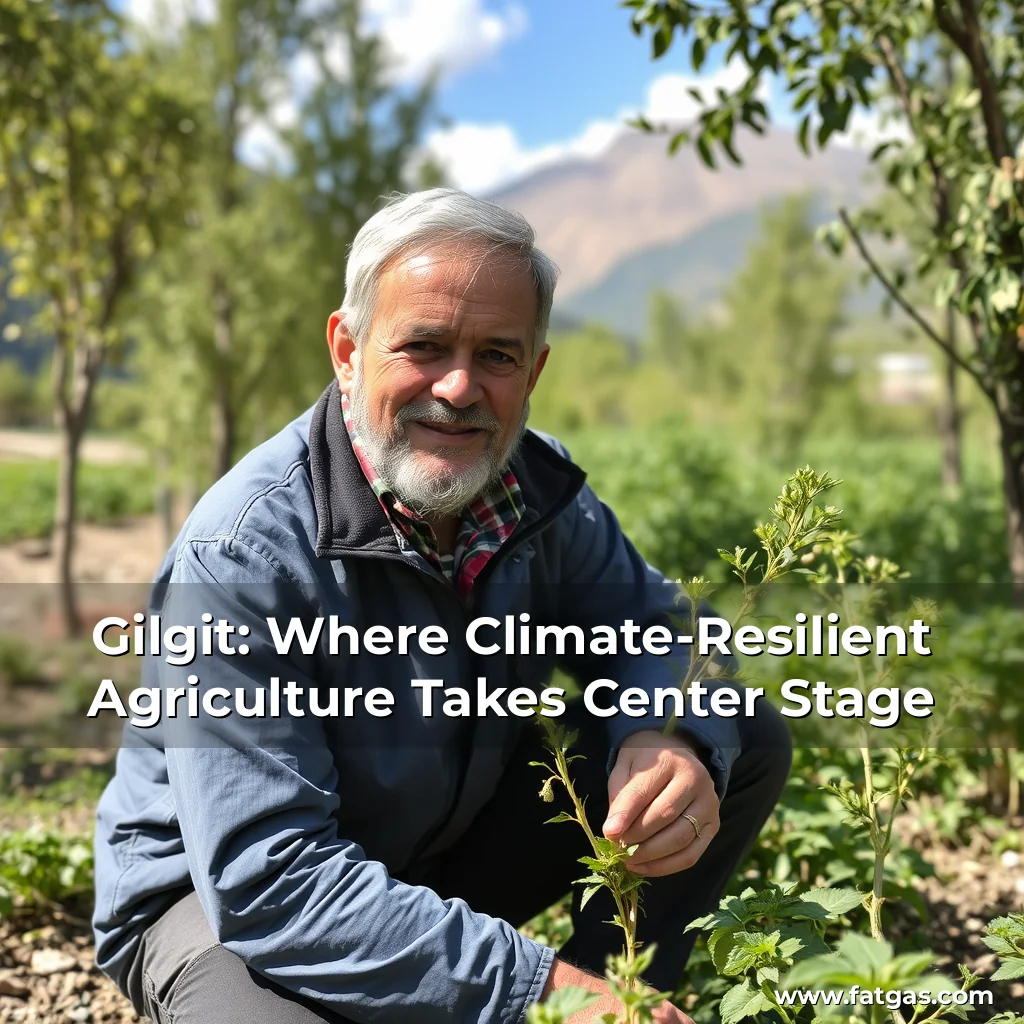
As the world grapples with the challenges of climate change, Gilgit-Baltistan has emerged as a pioneer in climate-resilient agriculture. The success of the ice stupa project has paved the way for a new era of innovative and sustainable agricultural practices, inspiring others to follow suit and ensuring a more secure food supply for generations to come.