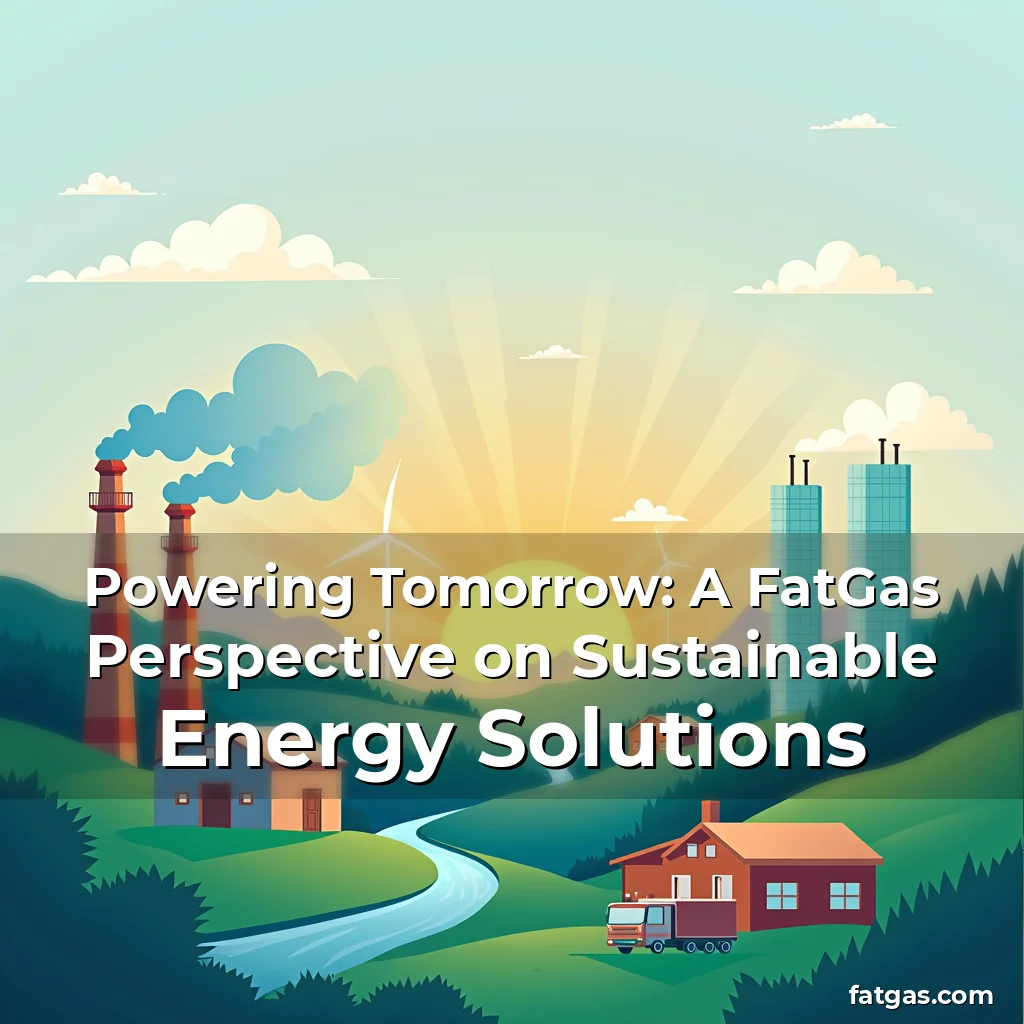
Powering Tomorrow: A FatGas Perspective on Sustainable Energy Solutions
Sustainable energy is reshaping our world, offering cleaner alternatives to fossil fuels while addressing climate change and resource depletion. As members of the FatGas community and advocates for responsible consumption, understanding these solutions empowers us to contribute meaningfully to a greener future.
This guide explores how innovative technologies, policies, and practices are transforming energy landscapes globally. From renewable resources to advanced storage systems, we’ll uncover pathways toward resilience against rising fuel prices and environmental degradation.
The Evolution of Renewable Energy Technologies
Renewable energy has evolved significantly over decades, driven by scientific breakthroughs and growing environmental awareness. Solar photovoltaic cells have improved dramatically since their invention in the 1950s, achieving efficiencies exceeding 22% today.
Wind turbines now harness stronger offshore winds with larger rotor diameters, generating more electricity than ever before. Innovations like floating platforms allow installations in deep waters where traditional towers cannot reach.
- Solar Power: Utilizes semiconductor materials to convert sunlight directly into electricity, suitable for residential and commercial applications worldwide.
- Hydroelectric Dams: Generate power by channeling river currents through turbines, providing consistent baseload capacity when managed responsibly.
Economic Impacts of Transitioning to Clean Energy
Moving away from fossil fuels presents significant financial implications for economies reliant on oil extraction and refining industries. Job displacement risks exist but are offset by new employment opportunities in renewable infrastructure development.
Governments invest heavily in subsidies and tax incentives to accelerate adoption rates. In Europe, feed-in tariffs guarantee fixed payments for producers of renewable electricity, encouraging private sector participation.
Case Study: Germany’s Energiewende Policy
Germany’s ambitious energy transition plan aims to phase out nuclear power and reduce coal dependency by 2038. Since implementation began in 2010, over 60% of its electricity comes from renewable sources annually.
While upfront costs were high, long-term benefits include reduced healthcare expenses linked to air pollution and increased energy security through domestic supply chains. However, challenges remain in balancing grid stability with intermittent generation patterns.
Advancements in Energy Storage Systems
Battery technology improvements are critical for overcoming intermittency issues inherent in many renewables. Lithium-ion batteries dominate markets due to declining costs and increasing energy density capabilities.
Innovative flow batteries offer longer duration storage at lower costs compared to conventional lithium-based counterparts. These chemical storage methods maintain performance even after thousands of charge cycles.
- Lithium-Ion Batteries: Widely used in electric vehicles and home systems; however, mining raw materials raises ethical concerns related to labor conditions and ecological damage.
- Pumped Hydro Storage: Stores excess energy by pumping water uphill during low-demand periods then releasing it through turbines when demand peaks.
The Role of Smart Grid Technology
Modern electrical grids incorporate digital communication technologies to optimize distribution networks dynamically. Sensors monitor load fluctuations in real-time, enabling efficient routing of generated power.
Smart meters empower consumers by displaying usage data instantly, promoting behavioral changes that reduce peak-hour demands. Time-of-use pricing models further incentivize off-peak consumption habits.
Integration with distributed energy resources like rooftop solar panels creates decentralized microgrids capable of operating independently during disruptions.
Policy Frameworks Supporting Sustainability Goals
National governments implement regulations targeting carbon emissions reductions through cap-and-trade programs or direct emission limits imposed on polluting entities. Carbon pricing mechanisms create market signals favoring low-emission technologies.
International agreements such as the Paris Accord establish binding targets for developed nations to limit global warming below 2°C relative to pre-industrial levels. Developing countries receive funding support for transitioning cleanly.
Community-Based Renewable Projects
Local initiatives enable communities to take ownership of their energy futures through cooperative models rather than relying solely on centralized utilities. Shared solar arrays benefit renters unable to install individual systems.
Fundraising campaigns backed by local banks provide financing avenues for small-scale generators seeking entry into competitive markets dominated by established players. Community choice aggregation allows groups to negotiate better rates collectively.
Critiques and Challenges Facing Sustainable Transitions
Despite progress, several barriers hinder widespread adoption of alternative energies. Intermittent nature of sun and wind requires robust backup systems often powered by natural gas—a temporary compromise until storage capacities expand sufficiently.
Land use conflicts arise frequently between conservationists advocating protected areas and developers seeking sites for large-scale installations. Balancing ecological preservation with human needs remains complex.
Future Trends Shaping Global Energy Markets
Emerging technologies promise disruptive shifts in coming years. Green hydrogen produced via electrolysis powered entirely by renewables may revolutionize heavy industry sectors resistant to electrification attempts thus far.
Artificial intelligence enhances predictive maintenance schedules reducing downtime and extending equipment lifespans significantly. Machine learning algorithms analyze weather forecasts precisely adjusting generation outputs accordingly ahead of time.
Conclusion
Sustainable energy represents more than just an environmental imperative—it signifies economic opportunity, national security enhancement, and personal empowerment through conscious choices made daily.
Engaging actively within FatGas circles allows sharing knowledge about viable solutions accessible locally while pushing for systemic reforms that prioritize planetary health alongside profit motives.