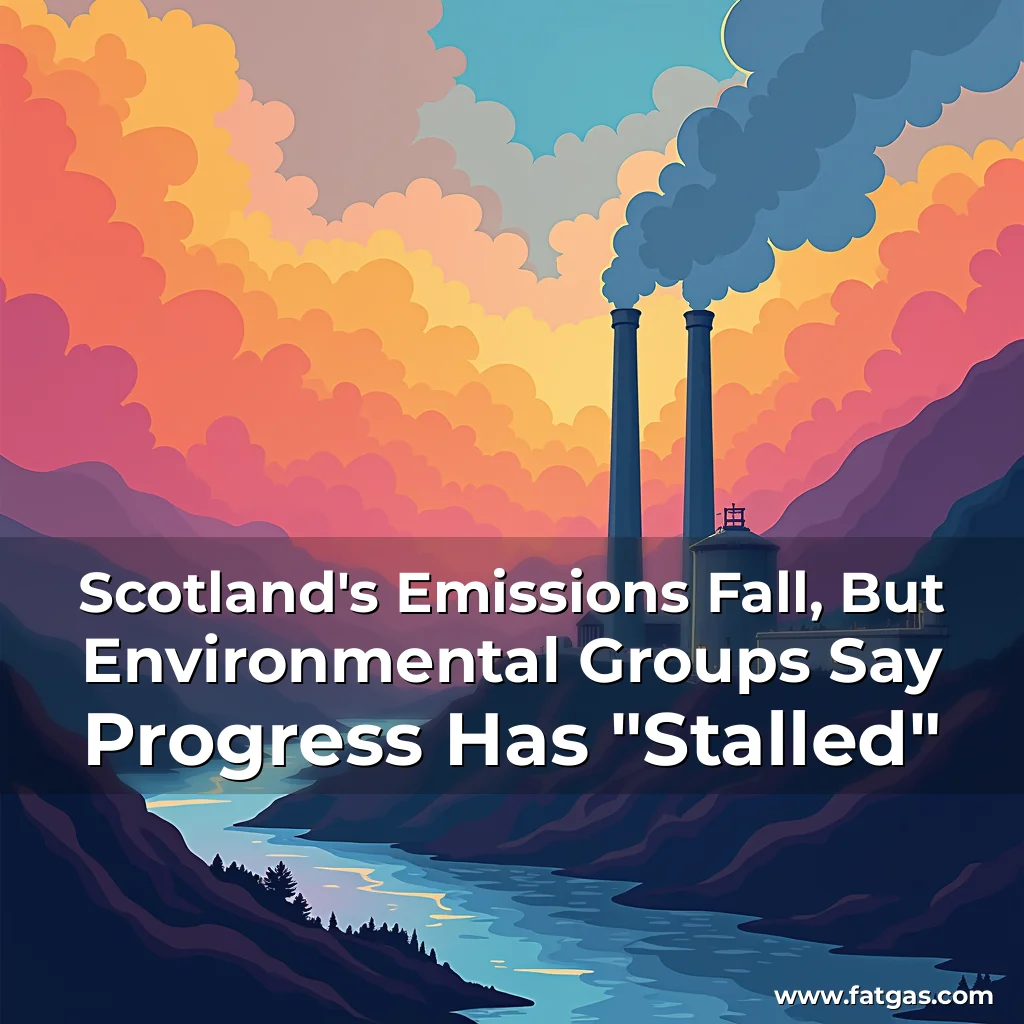
Despite a 1.9% year-on-year drop in emissions such as carbon dioxide for 2023, environmental groups say that progress has “stalled” in Scotland’s efforts to reduce greenhouse gases.
- Emissions from domestic transport remain the single biggest source of emissions.
- Emissions from agriculture are broadly unchanged, although the industry is now only the third most emitting sector.
- Emissions from heating in buildings have surpassed agriculture as the second most emitting sector.
The Scottish government claims that significant actions have been taken over the last two years to bring emissions down further. The biggest reduction came from the electricity sector, which has shifted to renewables, principally onshore and offshore wind.
| Electricity | 44% reduction |
| Domestic Transport | 29% of total emissions |
| Agriculture | Broadly unchanged |
A big cut in generation from Scotland’s only gas-fired power station, at Peterhead, saw the electricity sector’s emissions fall by 44%. This has been largely offset by a bounce back in international air travel after the pandemic.
- Emissions from fuel production and distribution have dropped by 13%.
- Emissions from heating in buildings have increased by 2%.
Despite the progress, environmental groups say that the reductions “are simply not enough.” The WWF Scotland has expressed concerns that the emissions from transport, buildings, and agriculture remain largely unchanged and are too high.
“We need to see a more significant reduction in emissions from these sectors, and we need to see it now,” said Claire Daly, Head of Policy at WWF Scotland.
The Institute for Public Policy Research (IPPR) has also expressed concerns that progress has stalled. Research fellow Dave Hawkey said: “The parliament’s recognition of a climate emergency in 2019 was not matched by a step change in policy. Instead, timid piecemeal initiatives crowded out more ambitious ideas.”
The Scottish government has missed nine of the last 13 targets and eventually decided to scrap them. It means that Scotland is currently without any interim targets for cutting emissions until it legislates to replace them with five-yearly carbon budgets. The long-term goal, to reach net zero by 2045, remains in place. Net zero is the point where no more greenhouse gases are being added to the total in the atmosphere. The Scottish Conservative Party’s energy and net zero spokesman, Douglas Lumsden, said: “Nationalist ministers love to boast that they are world-leading on this issue, but they can’t even meet their own emissions targets and their sheer incompetence forced them to dump them all altogether.”
He added: “Reaching net zero by 2045 is not affordable for the public. That’s why the Scottish Conservatives are calling for an affordable transition that keeps bills low for businesses and consumers.”
Scottish Labour’s net zero spokesperson, Sarah Boyack, said: “The SNP’s record on the environment is one of grand promises and woeful delivery. It’s clear more must be done to drive down emissions in Scotland and do so in a way that delivers lower bills for struggling Scots and creates good quality green jobs.”
The concerns are echoed by the fact that the reductions in emissions have been largely offset by a bounce back in international air travel after the pandemic. This has meant that the progress made in reducing emissions has been largely undone. Highlights
* Emissions from domestic transport remain the single biggest source of emissions. * The electricity sector has made significant progress in reducing emissions. * Environmental groups say that progress has “stalled” and that more needs to be done to reduce emissions.
*
: The release of greenhouse gases into the atmosphere, primarily caused by human activities. *
: The point where no more greenhouse gases are being added to the total in the atmosphere. The road to net zero is a complex and challenging journey, but it is essential for mitigating the impacts of climate change.