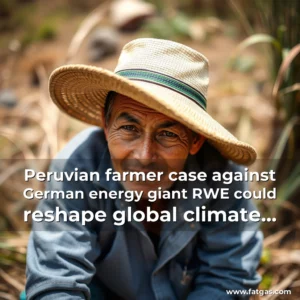

The battle against climate change is gaining momentum worldwide, and as countries ramp up efforts to tackle this pressing issue, a new report highlights the crucial role that indigenous peoples, Afro-descendant peoples, and local communities play in preserving nature-based solutions. The report, titled “The Carbon Rights of Indigenous Peoples, Afro-descendant Peoples, and Local Communities in Tropical and Subtropical Lands and Forests,” was published by the Rights and Resources Initiative (RRI) and presents the most comprehensive legal analysis to date on how carbon rights are recognized and protected across 33 countries.
Carbon Rights: A Critical Component of Nature-Based Climate Solutions
Carbon rights are legal claims that determine who can access and benefit from the carbon stored in forests and other ecosystems. These rights are especially important for indigenous peoples and local communities (IPLCs) who have traditionally managed and protected forests, yet often lack formal recognition of their land and resources. The report emphasizes that unclear or unprotected carbon rights pose significant risks to both people and nature, highlighting the need for stronger legal recognition and protection of these rights.
Importance of Biodiversity and Forests
Forests and biodiverse ecosystems act as natural carbon sinks, storing significant amounts of carbon dioxide. Richer the biodiversity, more resilient the ecosystem, and more effectively can it store carbon over time. Diverse plant species also improve the efficiency of carbon capture compared to monoculture plantations. Safeguarding biodiversity offers advantages beyond climate mitigation, such as cleaner air and water, creating healthy habitats for wildlife, and supporting forest-dependent communities.
Challenges and Risks
However, many nature-based climate solutions being promoted today risk sidelining the communities that have maintained these ecosystems. The RRI report provides a systematic legal review of carbon rights in 33 countries across Asia, Africa, and Latin America, regions that together hold around 67% of tropical and subtropical forests. These countries are home to 1.54 billion rural people, accounting for more than 44% of the global rural population. The report examined 35 legal indicators to show how well national laws and policies protect the rights of IPLCs in relation to land tenure, carbon trading, and participation in climate strategies like Reducing Emissions from Deforestation and Forest Degradation. These indicators also included gender-specific protections and existence of grievances and benefit-sharing mechanisms.
- Weak legal frameworks:** Most countries have not adopted the necessary laws to fully acknowledge or protect the carbon rights of IPLCs. This undermines their ability to participate fairly in carbon trading schemes.
- lack of benefit-sharing mechanism: Nearly 54% of the countries assessed do not have a clear mechanism for sharing the benefits generated by carbon projects with local communities. Only three out of the 33 countries have established operational benefit-sharing policies that include minimum allocations for affected communities.
- Inadequate safeguards: Only 26 out of 33 countries have fully operational safeguards information systems that comply with international standards for REDD+ activities. This raises concerns about whether local communities can access vital information regarding how their lands are being used.
- Consent issues: The report emphasizes the need for countries to ensure that projects obtain the free, prior, and informed consent from Indigenous communities before moving forward. This right is critical to protect communities from the harmful impacts linked to carbon trading initiatives.
- Gender inequality: Only two of the 35 indicators analyzed specifically referred to the rights of women within IPLCs, suggesting a gap in addressing gender issues in carbon rights and conservation efforts.
A Call to Action
The report stresses that to effectively address climate change and protect biodiversity, countries must strengthen their laws to support the rights of IPLCs. It calls for better legal recognition of land rights, equitable benefit-sharing from carbon projects, and robust safeguard mechanisms.
| Indicator | Result |
|---|---|
| Weak legal frameworks | Most countries have not adopted necessary laws to protect carbon rights of IPLCs |
| Lack of benefit-sharing mechanism | Nearly 54% of countries assessed do not have a clear mechanism for sharing benefits with local communities |
| Inadequate safeguards | Only 26 out of 33 countries have fully operational safeguards information systems |
| Consent issues | Report emphasizes need for countries to ensure free, prior, and informed consent from Indigenous communities |
| Gender inequality | Only two of 35 indicators analyzed specifically referred to rights of women within IPLCs |
Key Takeaways
The report highlights the need for countries to recognize and protect the carbon rights of IPLCs. This includes adopting stronger laws, establishing clear benefit-sharing mechanisms, and implementing robust safeguard mechanisms. By doing so, countries can effectively address climate change while supporting the rights and interests of indigenous peoples and local communities.
Quoted Section
“The carbon rights of indigenous peoples, Afro-descendant peoples, and local communities are critical to the success of climate change mitigation efforts. We need to ensure that these rights are recognized and protected, not only for the sake of the environment but also for the well-being of these communities.” – Rights and Resources Initiative
Conclusion
In conclusion, the report emphasizes the need for countries to recognize and protect the carbon rights of IPLCs. By strengthening their laws, establishing clear benefit-sharing mechanisms, and implementing robust safeguard mechanisms, countries can effectively address climate change while supporting the rights and interests of indigenous peoples and local communities. The fate of the planet and the well-being of these communities are intertwined, and it is essential that we take immediate action to protect their rights and interests.