
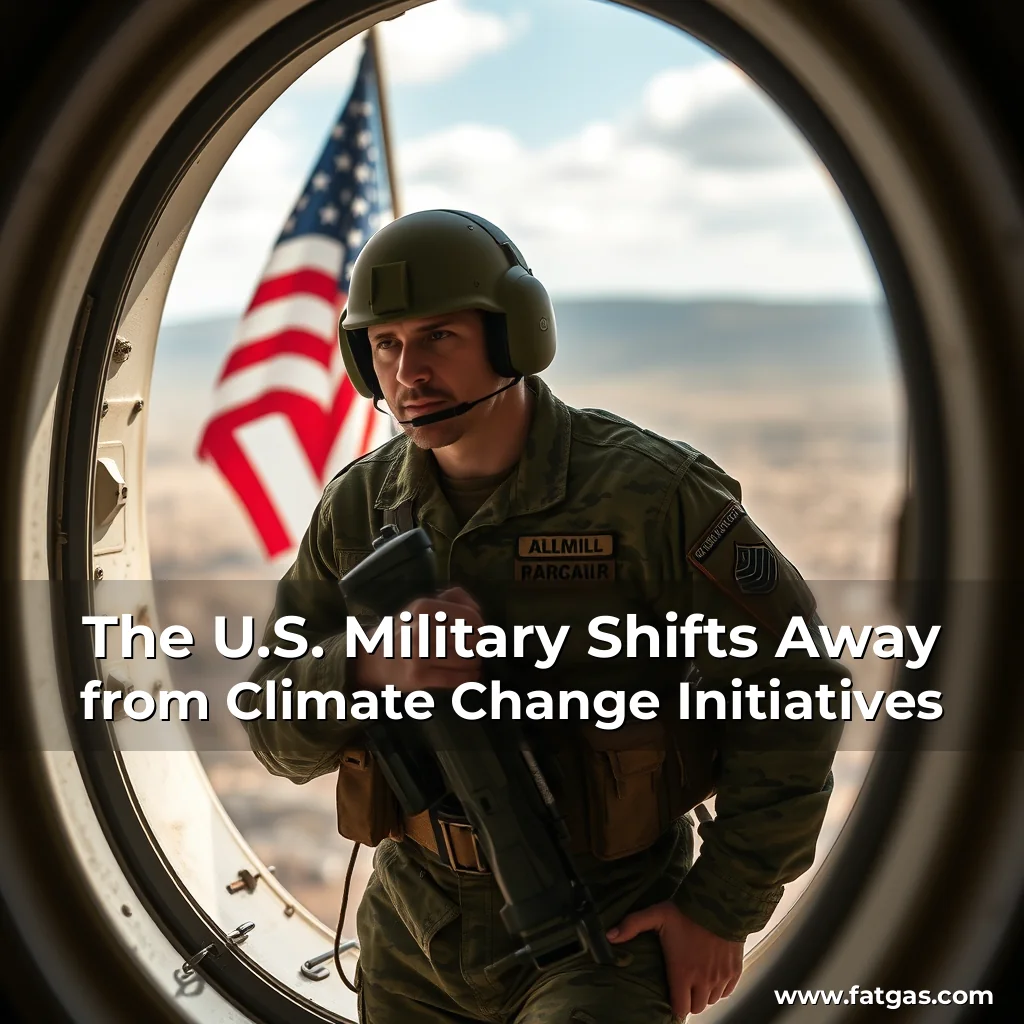
The U.S. military’s approach to addressing climate change has undergone a significant shift in recent years. Following a decade of costly investments with minimal results, the Department of Defense (DoD) has announced that it will be ending its climate change programs. This decision comes after a series of initiatives aimed at reducing carbon dioxide emissions and transitioning to renewable energy sources failed to yield tangible environmental benefits.
A Decade of Wasteful Spending
The DoD’s climate initiatives, which began in 2011, were intended to reduce the military’s carbon footprint and promote sustainable energy sources. However, these efforts have been widely criticized for being ineffective and wasteful. The Navy’s Great Green Fleet, for example, was launched with a goal of powering ships with biofuels. Despite spending an estimated $57 billion on green fuel programs, the Navy still relies heavily on petroleum, with 99% of its fleet continuing to use traditional diesel fuel.
- The Navy’s reliance on biofuels was hindered by logistical challenges, including the lack of availability in overseas ports.
- The program’s high cost was another significant issue, with biofuels costing seven times more than diesel per gallon.
The Air Force’s climate plans have also been met with skepticism. The service’s reliance on Sustainable Aviation Fuel (SAF) has been criticized for being expensive and ineffective. Despite claims that SAF reduces carbon dioxide emissions, the fuel is not widely available and may not provide the same level of environmental benefits as advertised.
Army’s Climate Strategy: Unfeasible and Costly
The Army’s Climate Strategy, announced in February 2022, called for the transition of its non-tactical vehicle fleet to electric vehicles by 2027. However, charging electric tanks on the battlefield is impractical and offers no military advantage. The plan also proposed electrifying light, medium, and heavy battlefield tactical vehicles, but these efforts are unlikely to be successful.
| Key Features of the Army’s Climate Strategy | Estimated Annual Cost | Feasibility |
|---|---|---|
| Transition of non-tactical vehicle fleet to electric vehicles by 2027 | $2 billion | Unfeasible |
| Electrify light, medium, and heavy battlefield tactical vehicles | Unknown | Unfeasible |
Coast Guard and Adaptation Measures
The Coast Guard Academy recently removed “climate change” from its academic curriculum, reflecting a broader shift away from climate-focused policies. While adaptation measures such as building sea walls and erecting flood barriers are sensible for building resilience to weather events, they are not tied to measurable climate change mitigation. These efforts are pragmatic but do not align with the broader, often ideological, climate change agenda.
A New Era of Military Realism
The DoD’s decision to end its climate change programs marks a significant shift in the military’s approach to addressing climate change. The era of green experimentation in the military is coming to an end, but the debate over defense priorities is far from over. military refocuses on immediate operational needs and combat readiness, the question remains: How will this shift impact the broader conversation on climate change and national security? The DoD’s decision to redirect funds from climate change initiatives to strengthening the military marks a new era of realistic policy. The debate over defense priorities will likely continue, but the military’s focus on practical, measurable outcomes will be a key factor in shaping the nation’s approach to climate change and national security.
Sources
* The Expose
* Heartland Institute
The U.S. military’s shift away from climate change initiatives is a significant development in the ongoing debate over defense priorities.