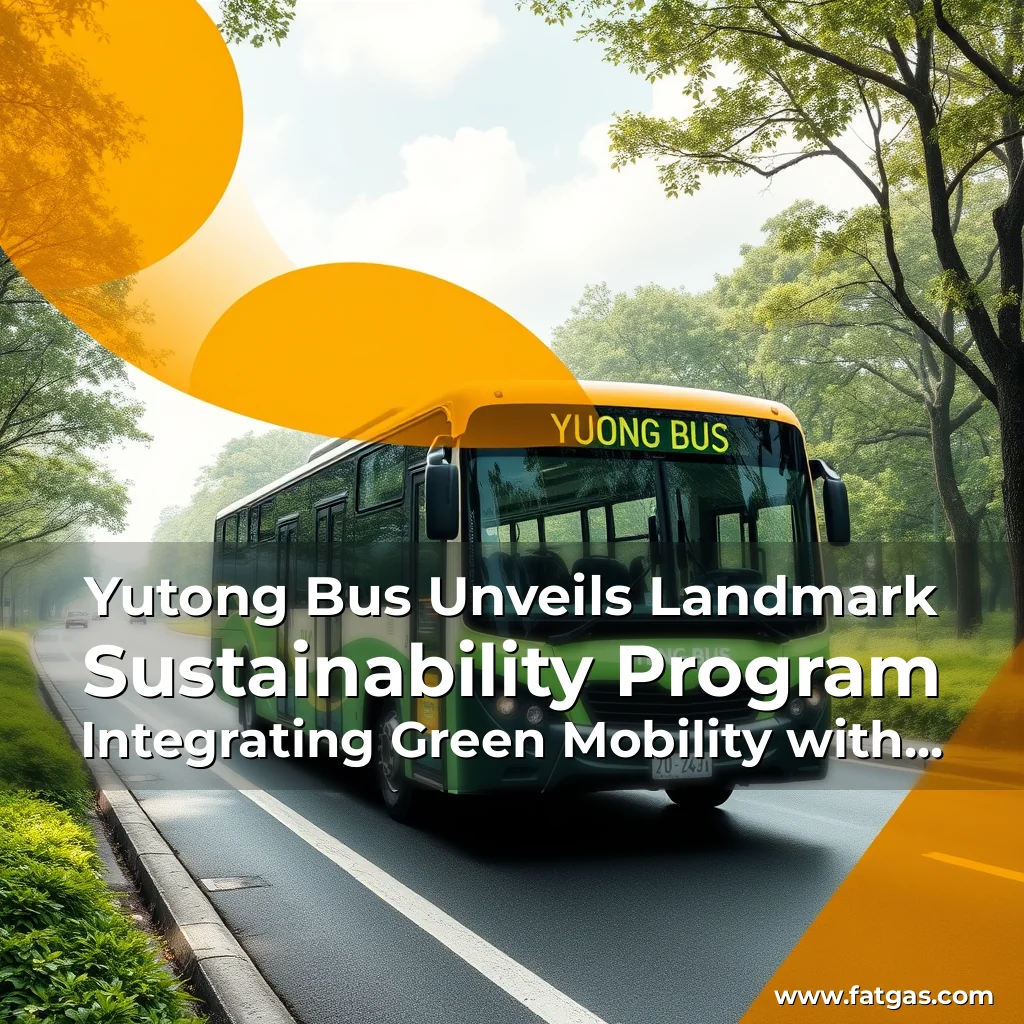
Building on its commitment to Think Eco, Move Green, Yutong Bus has unveiled a pioneering sustainability program that integrates green mobility with ecological restoration, reinforcing its leadership in low-carbon innovation. The program, which combines clean transportation with afforestation to reduce fossil fuel reliance and enhance natural carbon sinks, aims to make a tangible impact on the environment.
- Planting one tree for every bus sold
- Accelerating the adoption of zero-emission buses
- Restoring ecosystems via strategic afforestation
This innovative approach is designed to address climate change by engaging customers, partners, and communities in collective climate efforts. The program is supported by Yutong’s TEAM ZERO Alliance, a coalition of over 40 global new energy bus operators committed to advancing carbon neutrality.
“Sustainability is not just a goal for Yutong. It’s embedded in our DNA through our corporate commitment to Think Eco, Move Green,” said Jason Huang, Global Brand Director of Yutong Bus. “Linking every bus on the road to measurable ecological impact allows us to visualize the journey from vehicle production to carbon reduction.”
The 2025 campaign will focus on regions facing urgent ecological challenges with tailored solutions to address local needs. Each project will be supported by Yutong’s TEAM ZERO Alliance, and the company will use its digital tools to track carbon footprint reductions and optimize emission reductions. Key innovations underpin the program’s success include:
- “Double Carbon” Model: Combining clean transportation with afforestation to reduce fossil fuel reliance and enhance natural carbon sinks.
- Long-Term Commitment: A 10-year roadmap to plant millions of trees across the globe, ensuring lasting environmental and social impact.
- Tech-Driven Accountability: Digital tools like carbon footprint tracking quantify emission reductions, ensuring data-driven optimization.
Yutong’s commitment to green leadership fuels its mission to reshape global public transportation through decarbonization and enduring sustainability. The company has a long history of championing global climate action, and its initiatives have made a significant impact on the environment. Since 2021, Yutong has been at the forefront of global climate action. At COP26, the company showcased zero-emission public transport solutions for the UK. In 2023, its E12 electric bus earned dual certifications from the UK’s Zemo Partnership and UTAC, validating compliance with European standards for energy efficiency and carbon emissions. The 2024 Green Mobility Week in Australia further galvanized public engagement in low-carbon commuting. The Net Zero Forest initiative builds on this legacy, and since its 2024 pilot, the program has delivered localized benefits by:
- Halting desertification in Gansu
- Revitalizing urban ecosystems in the UK
- Rehabilitating climate-affected forests in Chile
Beyond ecological gains, the initiative also spurs green job creation, advocates for electrified public transit policies, and cements Yutong’s reputation as a sustainability trailblazer. Key Highlights
- Yutong Bus will plant 47,000 trees in 2025 as part of its Net Zero Forest initiative.
- The program will focus on regions facing urgent ecological challenges with tailored solutions.
- Yutong’s TEAM ZERO Alliance will support the program.
Yutong’s Commitment to Sustainability
Yutong’s unwavering commitment to sustainability fuels its mission to reshape global public transportation through decarbonization and enduring sustainability. The company’s Think Eco, Move Green philosophy has guided its sustainability strategy and ESG-driven corporate social responsibility (CSR) framework. Definitions:
- Sustainability:
- A long-term approach to environmental stewardship and social responsibility.
- ESG (Environmental, Social, and Governance):
- A framework for measuring and managing an organization’s environmental, social, and governance risks and opportunities.
Yutong’s sustainability strategy is built on several pillars, including:
- Green mobility: Yutong’s commitment to reducing carbon emissions through the adoption of zero-emission buses.
- Ecological restoration: Yutong’s efforts to restore ecosystems via strategic afforestation and habitat preservation.
- Supply chain management: Yutong’s focus on sustainable supply chain practices to minimize environmental impact.
Benefits of Sustainability:
- Reduced carbon emissions
- Improved social responsibility
- Enhanced brand reputation
Challenges of Sustainability:
- High upfront costs
- Regulatory challenges
- Stakeholder engagement
Solutions to Challenges:
- Investing in green technologies
- Developing sustainable supply chain practices
- Engaging stakeholders and promoting education
Global Climate Action
Yutong has been at the forefront of global climate action since 2021. The company has showcased zero-emission public transport solutions for the UK at COP26 and has earned dual certifications from the UK’s Zemo Partnership and UTAC for its E12 electric bus. Key Achievements:
- Reduced carbon emissions from transportation
- Improved air quality
- Enhanced public transportation systems
Future Plans:
- Continuing to develop and deploy zero-emission buses
- Expanding green mobility initiatives globally
- Engaging with stakeholders to promote low-carbon transportation
Conclusion:
Yutong Bus has unveiled a pioneering sustainability program that integrates green mobility with ecological restoration. As a leader in low-carbon innovation, Yutong Bus is committed to shaping the future of global public transportation through decarbonization and enduring sustainability.